Drought Tolerant Garden Design That Still Looks Full

Garden design writer at FlorAI
Updated · 9 min read
Drought tolerant garden design means choosing plants suited to your soil, sun and climate before you plant a single thing, then backing that choice with a mulch layer at least 5cm (2in) deep and a watering routine that tapers off after the first one to two years — not swapping soil for gravel and stopping there. Done properly, a dry garden can carry Mediterranean shrubs, silver-leaved perennials and ornamental grasses through a rainless summer with the borders still looking full, not scorched.
What Is Drought Tolerant Garden Design?
It is garden design built around three site checks before a single plant goes in: how much shade a spot receives, what type of soil it has, and how the local microclimate behaves against a wall or on paving that reflects heat. The Royal Horticultural Society frames this as fundamentally a matter of matching plants to conditions — sandy and chalky soils drain quickly and suit a wide range of drought-tolerant species, while heavy clay holds water so long that most classic dry-garden plants rot before they establish. Drought-tolerant garden design is not about giving up on planting, or accepting a garden that looks stressed by August; it is about placing species that already cope with low rainfall exactly where your garden already behaves like theirs does at home. The wider buying criteria for a genuinely useful design tool are covered in the best AI garden design app guide; this piece focuses specifically on the dry-garden version of that same discipline.
- Sandy soils drain quickly year-round and support the widest range of drought-tolerant species.
- Chalky soils behave similarly to sandy ground and suit most sun-loving Mediterranean plants.
- Clay soils are heavy and slow-draining, and need organic matter added over several years before dry-garden planting will thrive.
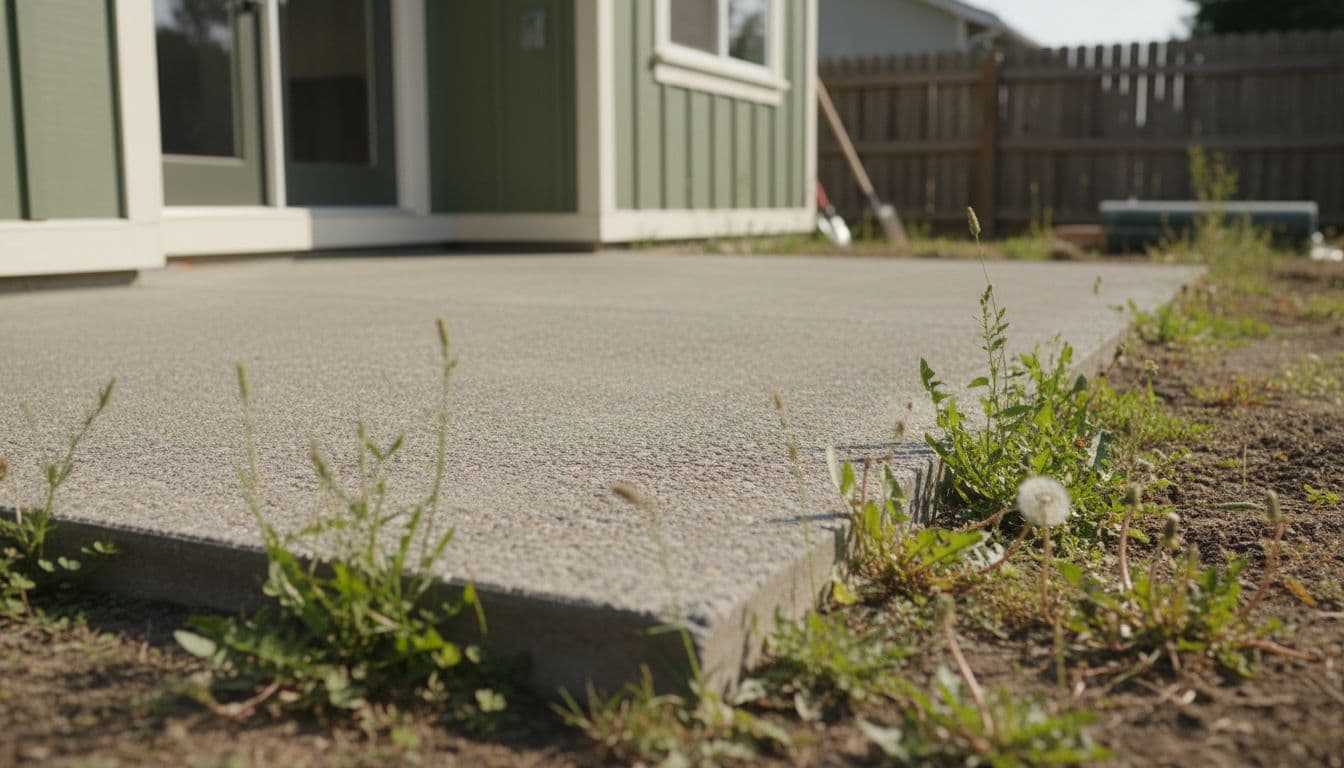
- Microclimates — a sun-baked spot against a south-facing wall, or an area with reflected heat off paving — often run drier than the rest of the garden and can take the most drought-tolerant choices.
Why Does Right Plant, Right Place Matter Most in Dry Gardens?
Because a plant fighting the wrong soil or aspect needs exactly the extra watering a drought-tolerant garden is meant to avoid. The RHS's right-plant-right-place principle is the whole discipline in miniature: choose species that already grow in dry, sunny, free-draining ground in the wild, and place them where your garden reproduces those conditions, rather than trying to force a moisture-loving plant to cope with less. Most classic drought-tolerant plants — Mediterranean shrubs, Californian natives, and plants from central Asia and the Himalayas — share physical adaptations that make the checking straightforward.
- Leathery leaves, as on Viburnum, Olearia and Ozothamnus, resist drying out in wind and sun.
- Fleshy or silver leaves, as on Hylotelephium (sedum) and Helichrysum, store moisture or reflect heat.
- Low, carpeting growth, as on Nepeta and Hylotelephium, shades the soil surface and slows moisture loss.
Before buying anything, check the plant's preferred soil against your own, confirm the aspect gets enough sun, and — in the United States — cross-check it against the 2023 USDA Plant Hardiness Zone Map, which divides the country into 13 zones and 5°F half zones from 1991–2020 weather data. A plant billed as drought-tolerant in one climate can still fail a winter it was never adapted to.
Which Plants Actually Survive Drought?
Real species with a trial record, not a marketing label. The RHS Award of Garden Merit — given only to plants trialled and judged reliable — includes several genuinely drought-tolerant performers that turn up in ordinary nurseries rather than only in show gardens.
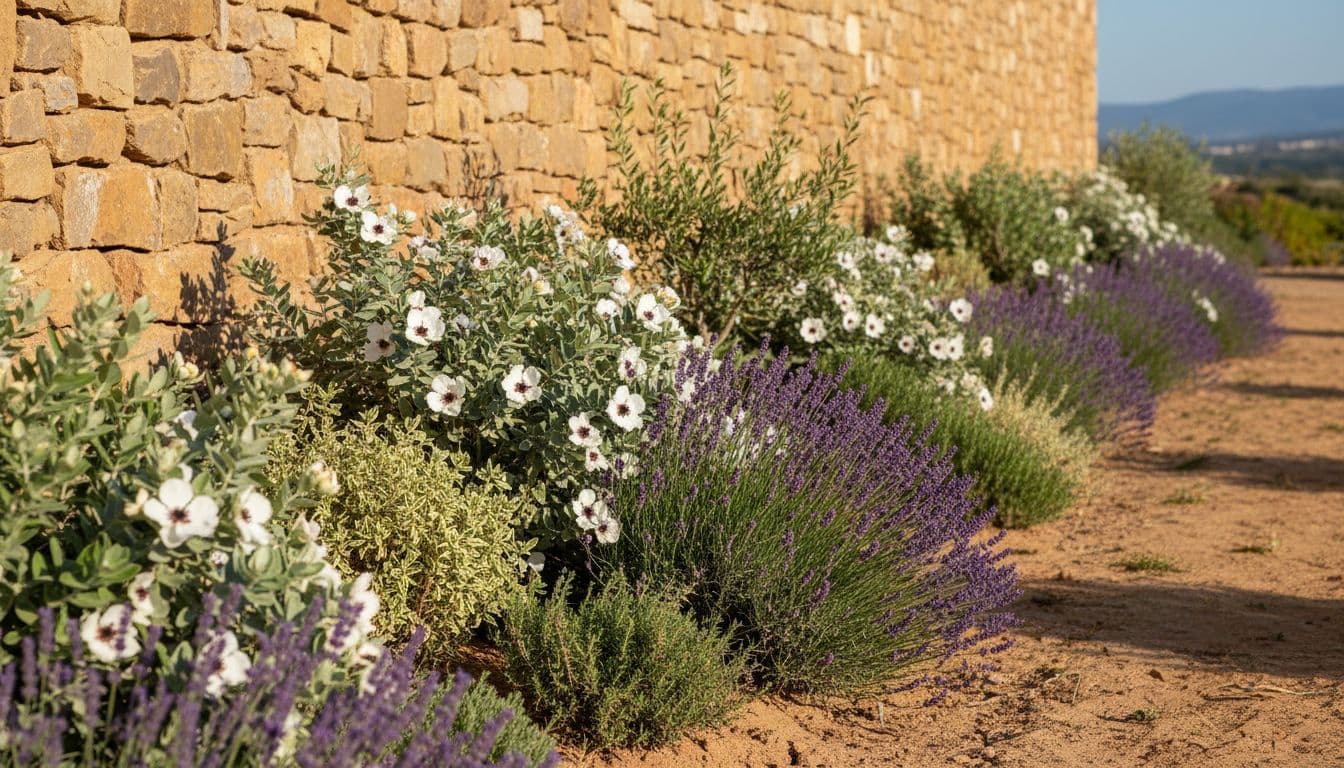
- Cistus × pulverulentus 'Sunset' AGM — an evergreen rock rose to 60cm (2ft), with magenta flowers all summer and grey-green leaves that resist drying out. Hardiness rating H4.
- Lavandula angustifolia 'Miss Muffet' AGM — a compact English lavender to 30cm (12in), useful as low, fragrant edging. Hardiness rating H5.
- Salvia 'Blue Spire' AGM (the RHS's current name for the plant many gardeners still call Perovskia) — upright silver foliage to 1.2m (4ft) with violet-blue flower spikes from August. Hardiness rating H5.
- Yucca filamentosa 'Color Guard' AGM — a dramatic evergreen rosette to 75cm (30in) with yellow-striped leaves and a 1.5m (5ft) flower spike, suited to dry, sunny slopes. Hardiness rating H5.
- Phlomis russeliana — a tough, grey-green perennial with tiered yellow flowers, one of several Phlomis species the RHS recommends for Mediterranean-style planting.
- Santolina chamaecyparissus — a low, silver-leaved sub-shrub often clipped into mounds, classically paired with lavender and Cistus in gravel gardens.
All of these feed pollinating insects as well as tolerating dry soil, which is worth knowing if a wildlife-friendly garden matters to you as much as a low water bill.
How Do You Prepare Soil and Mulch for Drought?
Preparation happens before and immediately after planting, not as an ongoing task. The RHS recommends planting in March, while the soil is warming and there is a full growing season ahead, or in September, when the soil is still warm and roots get months to establish before winter. Mediterranean-style, silver-leaved plants and warm-season grasses specifically do best planted in spring. Buy small: perennials in 9cm pots and young shrubs establish faster than large, pot-bound specimens, because a smaller root system adapts to new soil more easily.
- Mix in organic matter, such as home-made compost, before planting — it improves water-holding capacity in sandy soil and drainage in clay.
- Soak the rootball in a bucket of water until bubbles stop rising, so the plant goes into the ground already hydrated.
- Skip the fertiliser. The RHS is specific that feeding encourages soft, lush growth that dries out faster, which works against everything drought-tolerant planting is for.
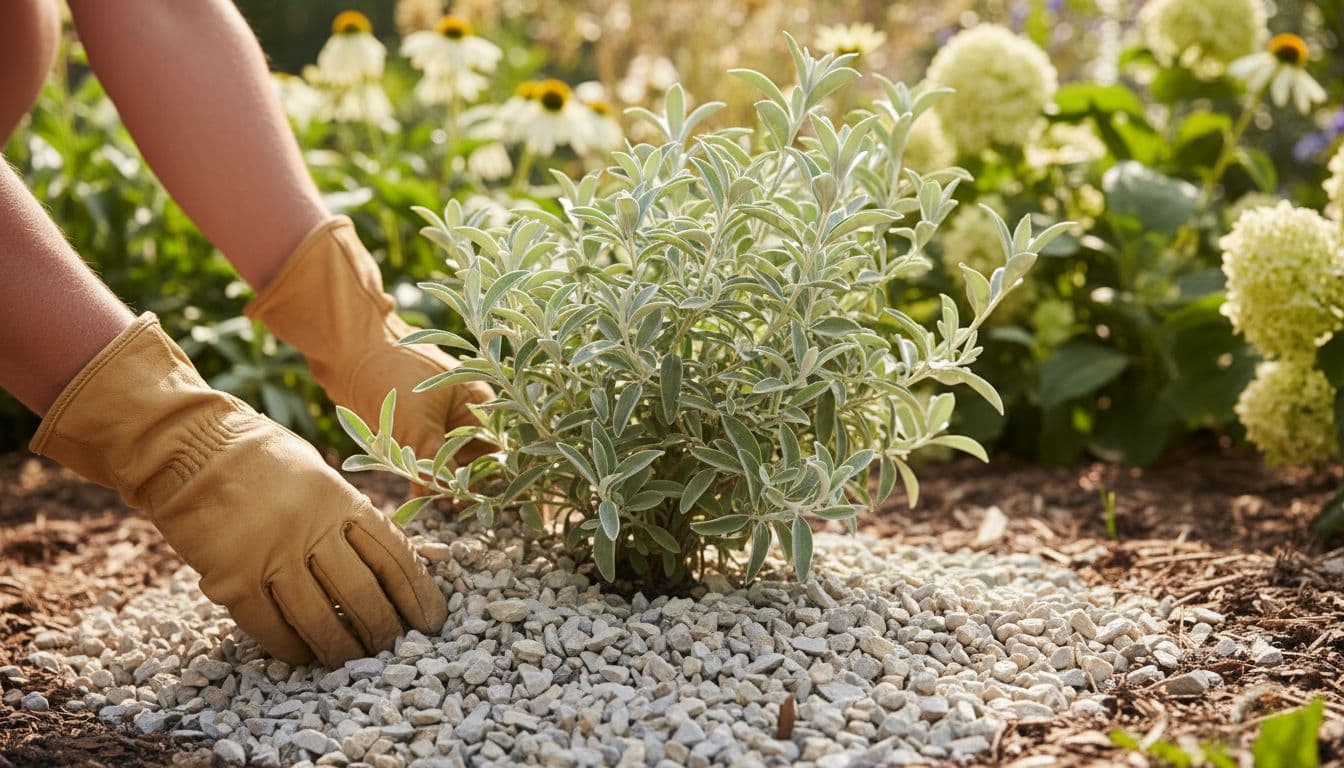
- Mulch immediately after planting with a layer at least 5cm (2in) deep — chipped bark or compost for mixed borders, or 5 to 7.5cm (2–3in) of gravel for a Mediterranean-style scheme — to cut evaporation and suppress weed seedlings.
Is a Gravel Garden the Easiest Route to Drought Tolerance?
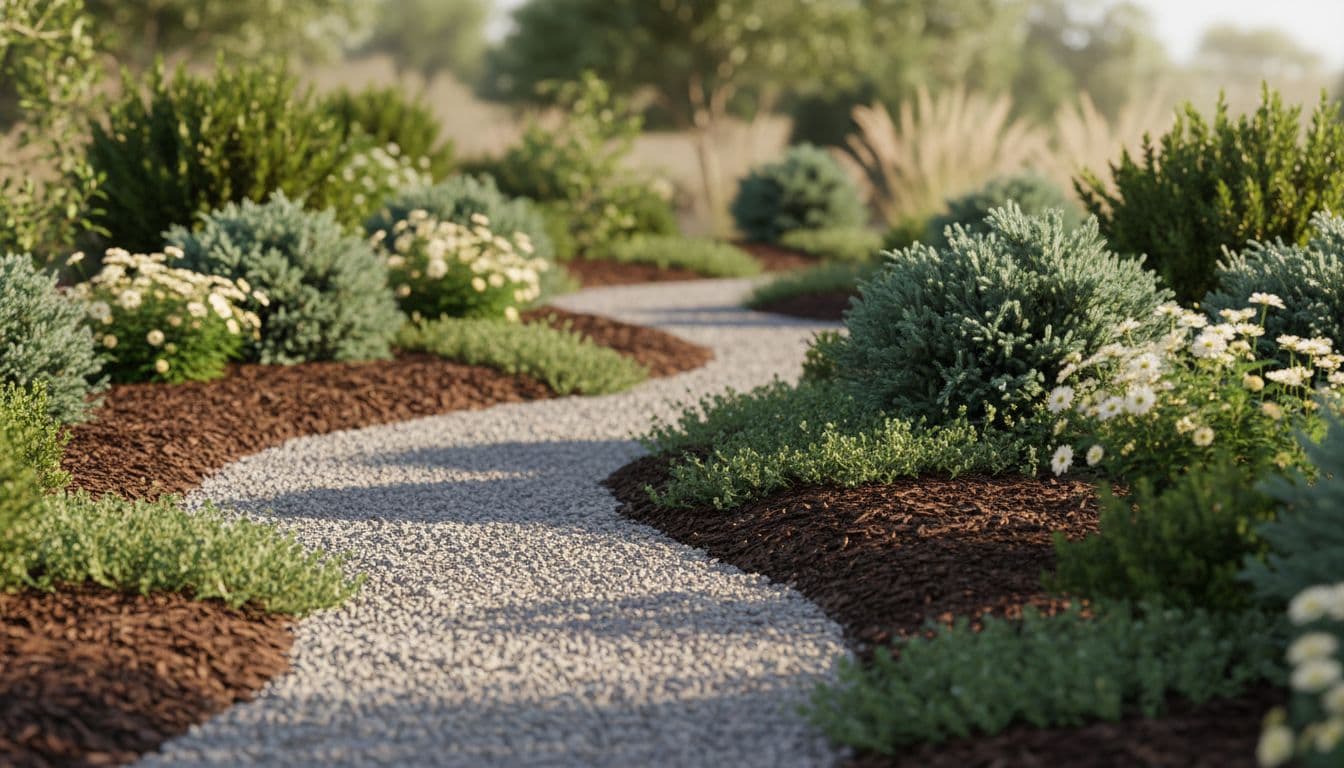
For a sunny, well-drained site, yes — with patience. A gravel garden suits Mediterranean planting particularly well: Cistus, lavender, Santolina and Phlomis all thrive in it while feeding pollinators at the same time. The RHS recommends laying landscape fabric over prepared soil before planting, cutting crosses just large enough for each rootball, which keeps weed seed in the soil below from reaching daylight. As a rough material guide, a 25kg bag of gravel covers about 0.6 square metres (6.5 sq ft) at a 5cm depth, or roughly 20 square metres per cubic metre bought loose. The most striking proof of what a mature dry garden can do is the dry garden at RHS Garden Hyde Hall in Essex, planted on free-draining gravel soil and not watered since 2001.
The honest caveat is timing: weeding is most intensive in the first two to three years, while plants are still filling their allotted space and the gaps between them are still open ground. After that, dense planting suppresses most of what would otherwise germinate. Gravel gardens do not suit every site — on heavy clay or where the water table sits high, the RHS advice is to choose a different style rather than fight the drainage.
See a drought-tolerant layout on your own garden first
Upload one photo of your space and generate a drought-tolerant design next to your current layout, so you can see where gravel, mulch and Mediterranean planting would actually go before you buy a single plant. Your first AI garden design with FlorAI is free, on iPhone, Android and the web.


Version 1.1.1 · 132 MB
How Do You Avoid the Gravel-Desert Look?
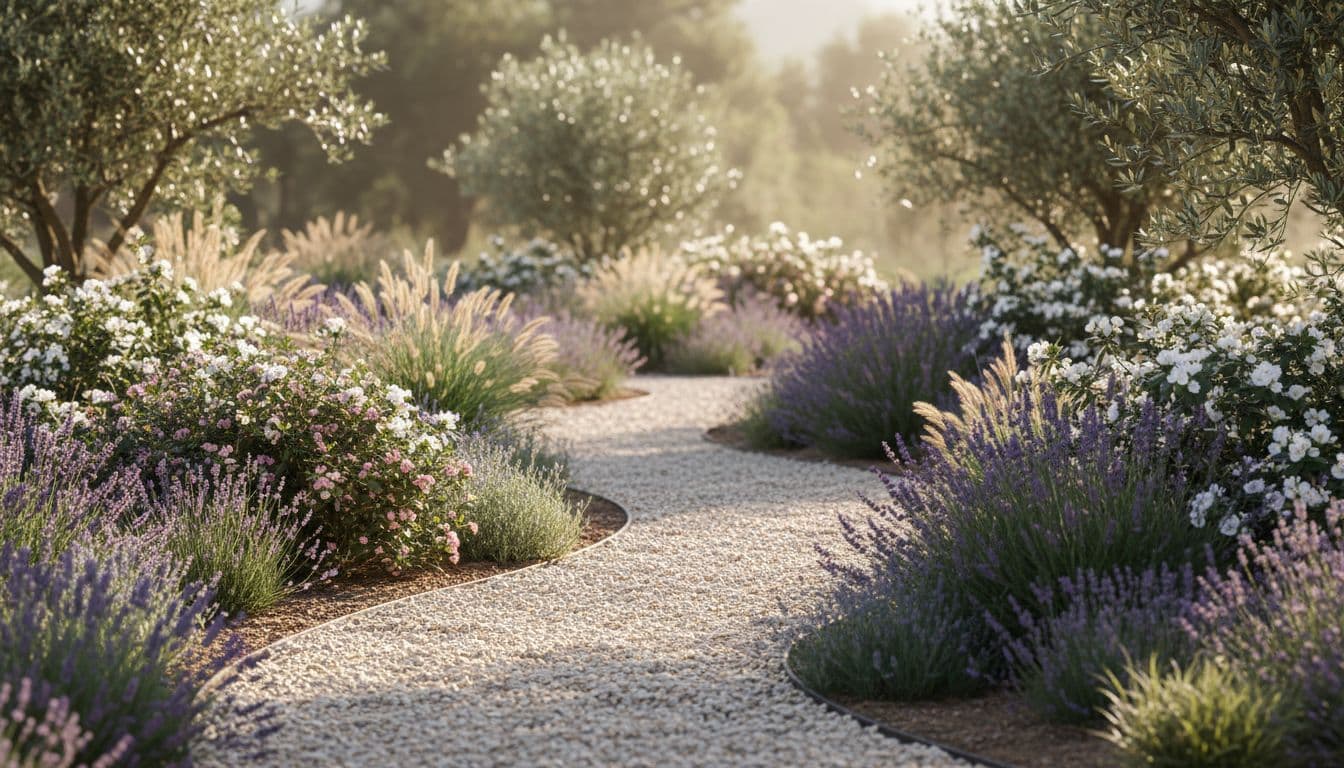
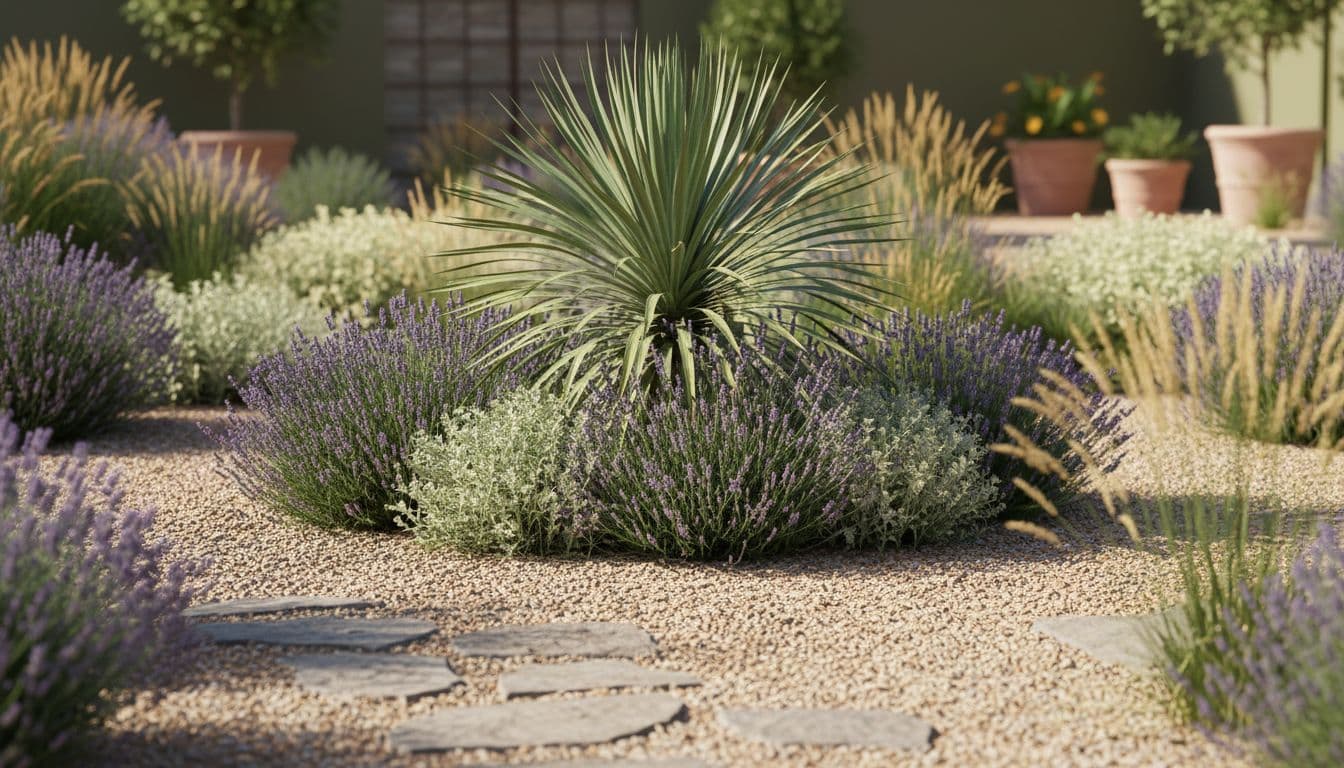
By layering height, texture and season the same way any good border does — gravel and drought tolerance are a soil strategy, not a style. A flat sheet of gravel dotted with identical low shrubs reads as bare no matter how little water it needs. Vary the silhouette instead: an architectural Yucca or the upright stems of Spartium junceum, Spanish broom, to 2m (6½ft) for height, mounding Santolina and Cistus for mid-layer bulk, and a self-seeding plant such as Lupinus arboreus, tree lupin, to 1m (3ft), which seeds freely into gravel, to soften edges without any extra planting.
- Repeat three or four species through the space instead of using one of everything, so the planting reads as a design rather than a collection.
- Keep some structure through winter with evergreen shrubs like Cistus and Santolina, since deciduous drought-tolerant plants like Spartium junceum leave gaps once they lose leaves.
- Add ornamental grasses for movement and a different texture against the silver, felted foliage typical of Mediterranean planting.
- Consider a lawn alternative — clover, thyme or a tapestry lawn of low-growing non-grass species — instead of assuming gravel has to replace every metre of lawn you remove.
A photo-based design tool is a fast way to test that layering before committing: FlorAI's garden style library includes Mediterranean and drought-tolerant looks built from real plant combinations, so you can see the height and texture mix against your own boundaries rather than guessing from someone else's gravel garden.
How Much Watering Do New Plants Actually Need?
More than the finished result suggests, at least at first. The RHS is direct that newly planted trees, shrubs and perennials need regular watering in their first year, or longer depending on their size at planting — even species fully described as drought tolerant once mature. Large tree specimens can need watering for up to three years after planting before their root systems reach deep enough to manage alone. New lawns, whether seeded or turfed, need consistent watering until they establish, regardless of what replaces them afterwards.
The payoff comes later: an established lawn rarely needs watering even if it turns completely brown in a dry summer, since it typically greens up again once rain returns, and established drought-tolerant borders should need no supplemental water at all in an average year. That gap between the first two establishment years and everything after is the entire case for drought-tolerant design — it is front-loaded effort in exchange for years of reduced work, in the same way low-maintenance garden design front-loads mulching and bed preparation to cut weekly upkeep later.
Which Drought-Tolerant Garden Mistakes Cost You Later?
Four mistakes turn up repeatedly. The first is feeding new plants to help them grow faster — fertiliser produces soft, lush growth that dries out faster than the slower, tougher growth drought-tolerant species are supposed to produce naturally. The second is planting in summer, when soil is driest and roots have no time to establish before drought conditions arrive; March or September planting gives roots a full season or several months of milder weather first.
The third is ignoring microclimates within a single garden: a bed against a south-facing wall or beside heat-reflecting paving runs considerably drier than an open lawn a few metres away, so the same planting plan will not perform the same way in both spots. The fourth is buying on the word 'drought-tolerant' alone without checking hardiness — a plant adapted to dry summers in one climate can still be killed by a wet, cold winter it was never bred to handle, which is exactly what a hardiness zone check is for. Working from your own garden's actual conditions, the way AI garden design from a photo starts from a real image rather than a generic template, avoids most of this by forcing the design to answer to a specific site instead of an average one.
Frequently Asked Questions
What is drought-tolerant garden design?
Drought-tolerant garden design is a planting and layout approach that matches species to your soil type, sun exposure and hardiness zone so the garden needs little or no watering once established, backed by a mulch layer at least 5cm deep to cut evaporation and suppress weeds.
How long do drought-tolerant plants need watering after planting?
According to the Royal Horticultural Society, newly planted trees, shrubs and perennials need regular watering for at least their first year, and large tree specimens can need watering for up to three years, even when the species is fully drought tolerant once mature.
What are the best drought-tolerant plants for a sunny border?
RHS Award of Garden Merit performers include Cistus × pulverulentus 'Sunset', Lavandula angustifolia 'Miss Muffet', Salvia 'Blue Spire' and Yucca filamentosa 'Color Guard', alongside Mediterranean staples such as Santolina and Phlomis russeliana.
Is a gravel garden the same as drought-tolerant garden design?
A gravel garden is one way to achieve it, well suited to sunny, free-draining sites and Mediterranean-style planting such as lavender and Cistus, but drought tolerance is really about plant choice and soil prep — the same principles apply to a mixed border mulched with bark instead of gravel.
How do I stop a drought-tolerant garden from looking bare?
Vary height and texture instead of repeating one low shrub across the space: combine an architectural plant such as Yucca, mounding shrubs like Santolina and Cistus, ornamental grasses for movement, and a self-seeding plant such as Lupinus arboreus to soften the gravel.
Drought-tolerant garden design is not a single gravel-and-cactus look — it is a discipline of matching real plants to your actual soil, sun and hardiness zone, mulching to hold what moisture there is, and accepting one or two seasons of watering before the garden mostly looks after itself. Test the idea on your own space before buying anything: FlorAI turns one photo of your garden into a design you can compare against what you have now, free on iPhone, Android and the web.
Sources
- Drought-resistant gardening — Royal Horticultural Society,
- 10 award-winning drought-tolerant plants — Royal Horticultural Society,
- Gravel gardens — Royal Horticultural Society,
- Garden design: Mediterranean garden plants — Royal Horticultural Society,
- 2023 USDA Plant Hardiness Zone Map — USDA Agricultural Research Service,
Read next