Low Maintenance Garden Design: Ideas That Stay Easy

Garden design writer at FlorAI
Updated · 9 min read
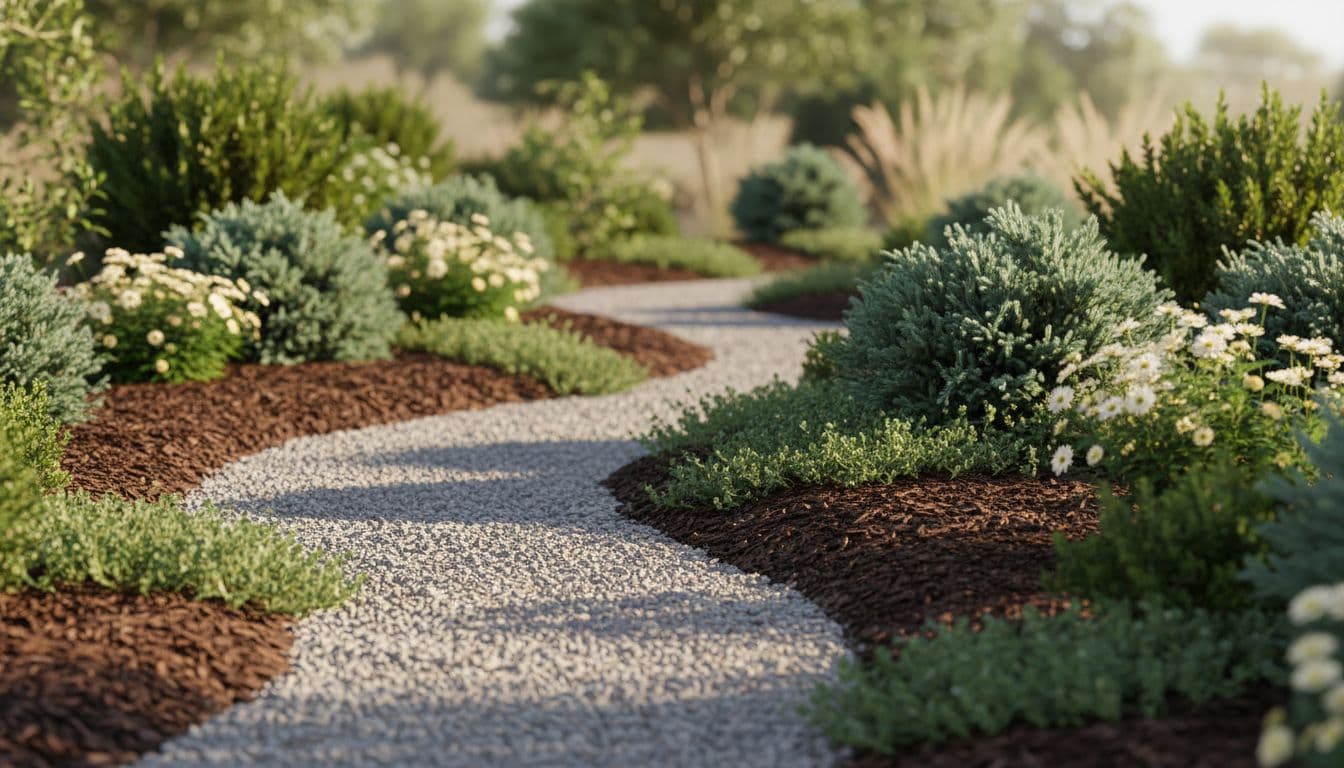
Low maintenance garden design means shrinking or removing the lawn, covering every bare patch of soil with a mulch layer at least 5cm deep, and choosing evergreen shrubs and true ground-cover plants that knit together to block weeds — not swapping soil for gravel and hoping for the best. Get those three decisions right and most of a year's recurring work disappears before you ever pick up a spade or a hose.
What Is Low Maintenance Garden Design?
It is a garden planned around the jobs that repeat, not the ones you do once. The Royal Horticultural Society is candid that there is no such thing as a 'no maintenance' garden — even the hardiest evergreen needs some care while it establishes — but most gardening tasks have a lower-effort alternative, and low-maintenance design is simply choosing that alternative at every stage: layout, lawn, borders and plant choice. The goal is not a bare or boring garden. It is one where the plants and materials are doing the work that a person would otherwise have to do by hand, every week, for years. The wider buying criteria for a genuinely useful design tool are covered in the best AI garden design app guide; this piece focuses specifically on what actually cuts the workload once a layout is built.
- Shrink or remove the lawn, which the RHS calls one of the most time-intensive features a garden can have.
- Mulch every bare patch with bark, gravel or compost at least 5cm deep to cut weeding and watering.
- Plant true ground cover — species bred or selected to spread into a dense, weed-suppressing mat.
- Lean on evergreen shrubs instead of herbaceous perennials that need staking, cutting back and dividing.
- Follow 'right plant, right place' so nothing you plant is fighting its soil, light or climate from day one.
Should You Ditch the Lawn or Just Shrink It?
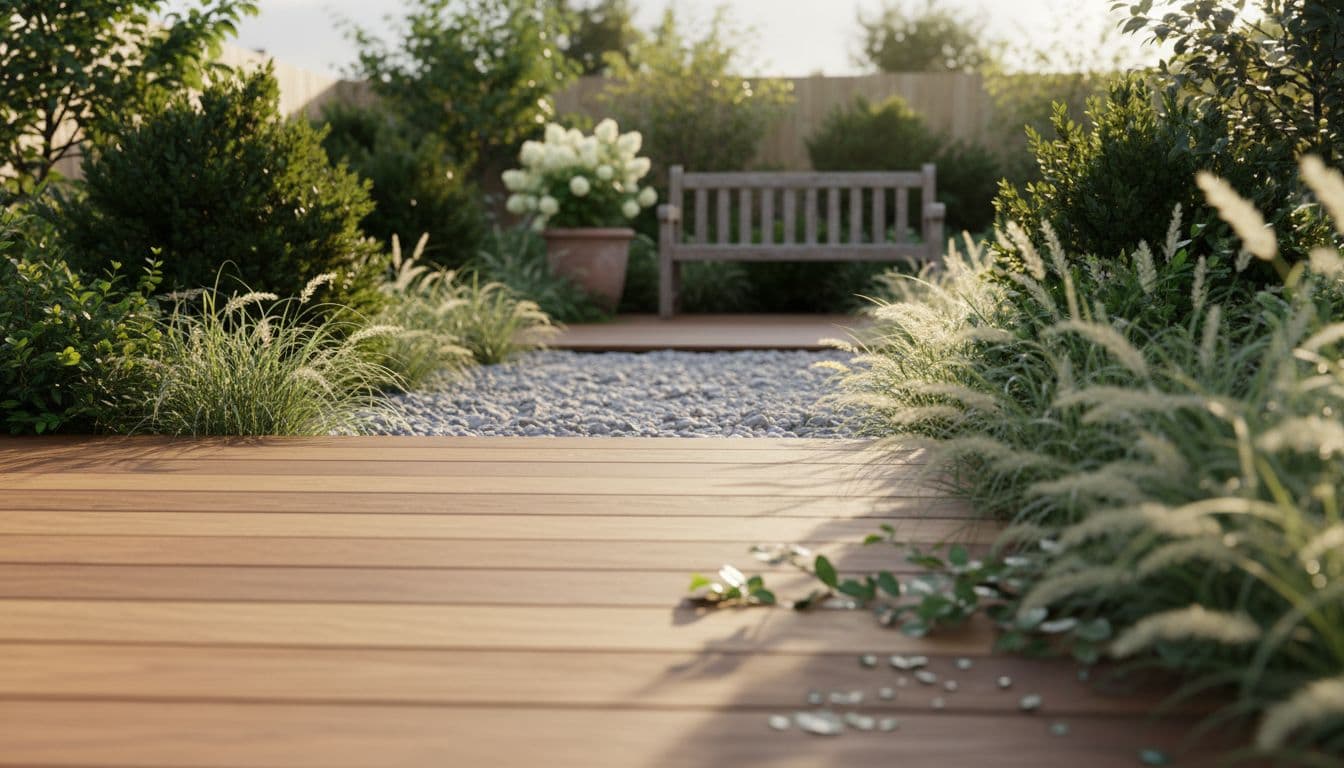
Start here, because lawn is where the hours go. The RHS's own advice for a small garden without children is blunt: ditch the lawn. A reasonably sized paved, gravelled or decked area, combined with generous borders, is usually less work than keeping a small patch of grass looking presentable, and it frees up the shed space a mower and strimmer would otherwise take. Permeable paving keeps rainwater draining into the soil rather than running off, which matters if you are removing turf for hardscape.
If you want to keep some lawn — for a dog, for children, or just because you like it — the RHS lists concrete ways to cut the workload rather than the grass itself. Install a permanent edge of brick or paving so you never hand-trim it. Choose a hard-wearing 'amenity' or 'multi-purpose' seed mix over fine turf, which needs far more feeding, aerating and mowing to look good. Let the clippings fall back onto the lawn instead of collecting them, which returns nutrients and cuts a step from every mow. And straighten out the fiddly corners and narrow strips that make a mower earn its keep. On a small plot the trade-offs shift again — see AI garden design for a small backyard for how zoning changes once space is tight.
How Much Work Does Mulch Really Save?
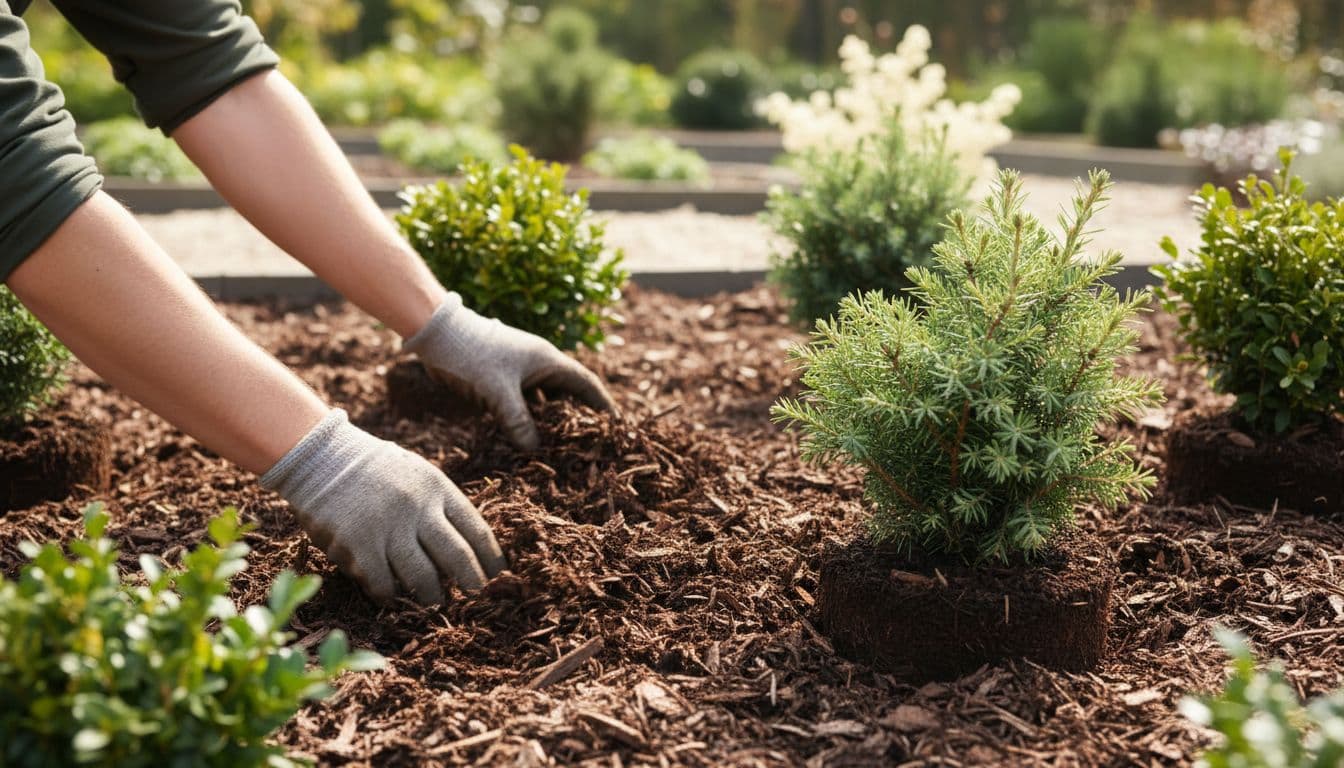
Enough that the RHS treats it as a foundational technique rather than a finishing touch. Mulch is any material — chipped bark, gravel, well-rotted compost, manure or slate chippings — spread over bare soil in a layer at least 5cm deep, usually between late autumn and late winter. It suppresses weed seedlings by blocking the light they need to germinate, slows evaporation so borders need watering less often, and protects roots from hard frost. Applied over a weed-suppressing membrane, shrub beds can go several seasons before they need weeding or a mulch top-up at all.
The trade-off is upfront cost and labour, not ongoing effort: a mulched, membrane-backed shrub border becomes one of the lowest-maintenance parts of a garden precisely because the work is front-loaded into a single afternoon rather than spread across every weekend from spring to autumn.
Which Ground Cover Plants Earn Their Place?
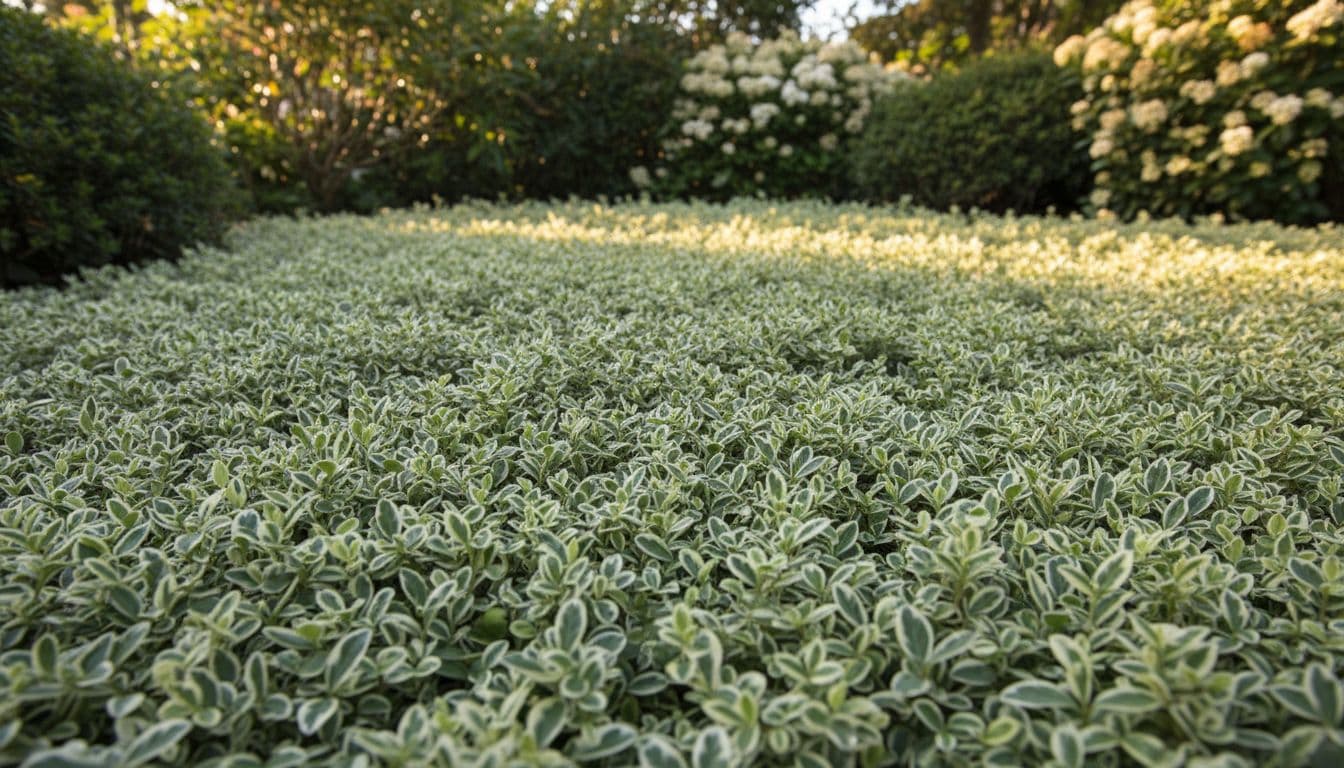
Not every low, spreading plant qualifies. The RHS defines a genuine ground-cover plant as one that forms rapid, dense cover — usually because it is evergreen or densely twiggy — specifically to suppress weed seed germination and cut the need for weed control. The trade is a year or two of watering and occasional weeding while the plants establish, in exchange for years of a self-maintaining mat afterwards. FlorAI's garden style library includes several low-maintenance-friendly looks built around this kind of planting, useful for seeing the effect before choosing species.
- Veronica pinguifolia 'Pagei' AGM — a low, silver-leaved shrub spaced about 45cm apart, one of the RHS's top five ground-cover recommendations.
- Pachysandra terminalis 'Variegata' AGM — evergreen and shade-tolerant, planted 30cm apart, but only on acid, reliably moist soil.
- Vinca minor 'Atropurpurea' AGM — a trailing evergreen periwinkle spaced around 60cm apart that tolerates a wide range of soils.
- Bergenia 'Silberlicht' AGM — bold, leathery evergreen leaves at roughly 45cm spacing, useful for front-of-border structure as well as cover.
- Rubus tricolor — a vigorous evergreen bramble relative spaced about 45cm apart, best where it has room to spread without swamping neighbours.
Why Does Right Plant, Right Place Matter So Much?
Because a plant fighting its conditions is a plant that needs constant attention — extra water, extra feed, replacement when it eventually fails — which is the opposite of low maintenance. The RHS puts it simply: lavender thrives in a sunny, free-draining border but sulks in anything waterlogged, and the fix is not more effort, it is choosing a different plant for that spot in the first place. The same logic scales from a single lavender to an entire planting plan.
- Match the soil and drainage. A plant suited to sharp drainage will struggle in heavy clay, and vice versa, no matter how much care it gets.
- Match the aspect. Full sun, partial shade and deep shade each rule out large parts of the plant world; check a label or a reputable plant database before buying.
- Check the hardiness zone. The 2023 USDA Plant Hardiness Zone Map divides the United States into 13 zones and 5°F half zones from 1991–2020 weather data, a free way to confirm a plant survives your winter before it is in the ground.
- Check the mature size before you buy. Planting too close together creates a jungle that needs constant cutting back; planting a shrub where it will outgrow the space in three years just delays the work rather than avoiding it.
See a low-maintenance layout on your own garden first
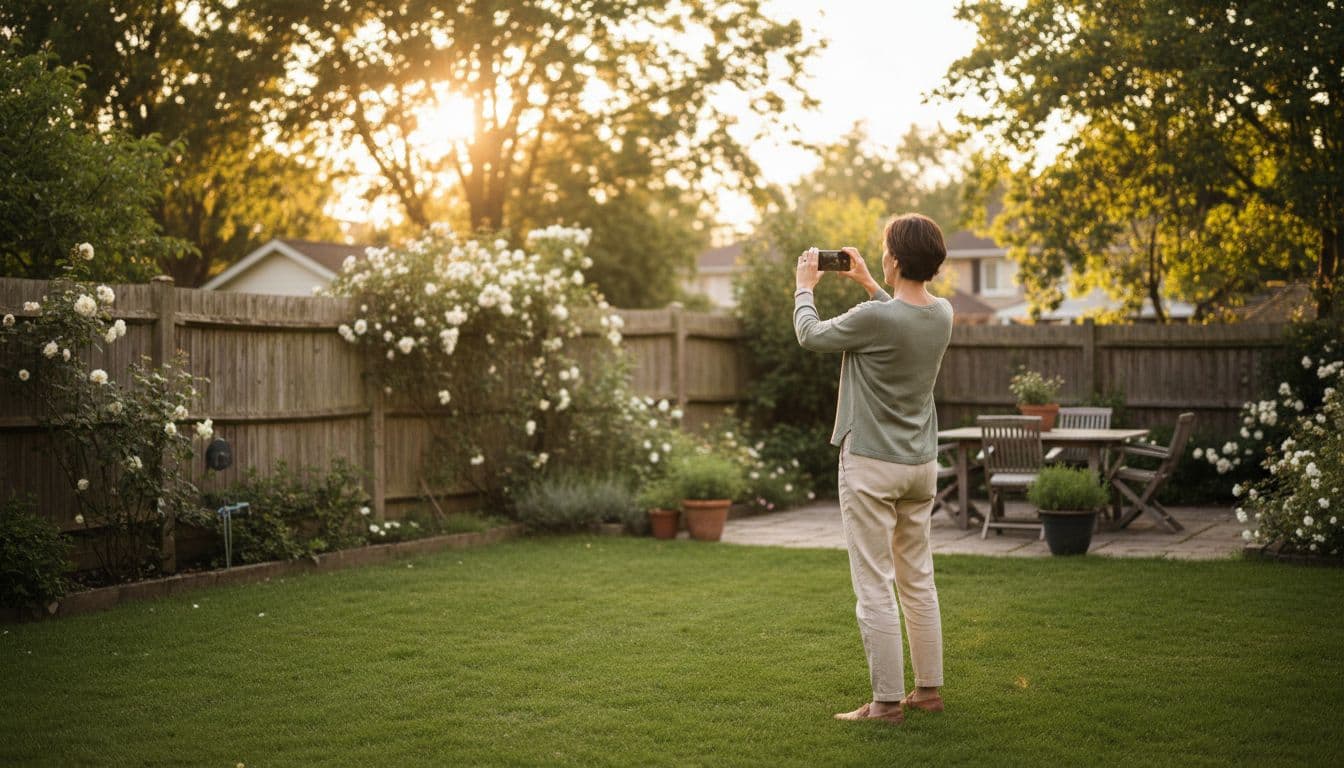
Upload one photo of your space and generate a low-maintenance design next to your current layout, so you can see where lawn, mulch and ground cover would actually go before you buy a single plant. Your first AI garden design with FlorAI is free, on iPhone, Android and the web.


Version 1.1.1 · 132 MB
Are Gravel Gardens Really Low Maintenance?
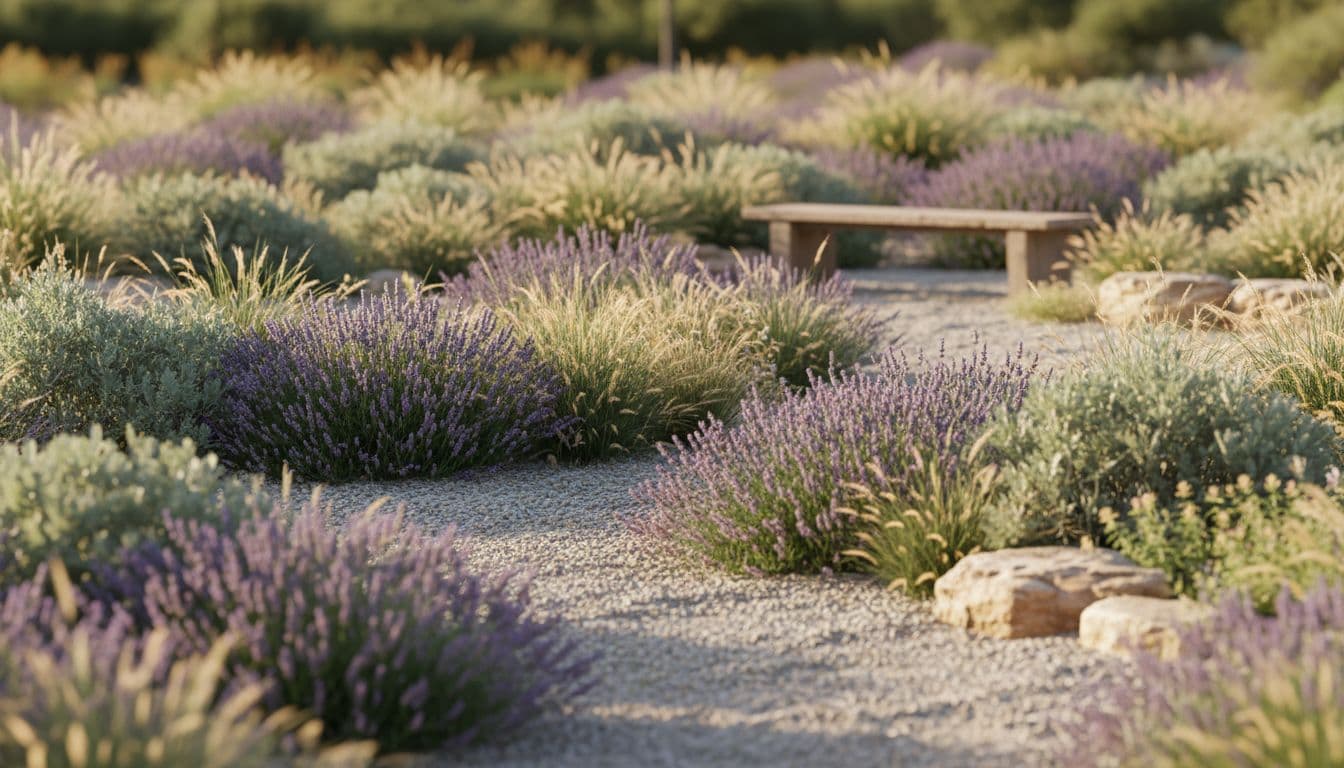
Eventually, yes — but not immediately. A gravel garden suits a sunny, well-drained spot and lends itself to Mediterranean-style planting: lavender, Cistus, Santolina and Phlomis all thrive in it and feed pollinating insects at the same time. The RHS recommends laying landscape fabric over the soil before planting, cutting crosses just large enough for each rootball, which keeps weeds from the soil below out of the picture almost entirely. As a rough material guide, a 25kg bag of gravel covers about 0.6 square metres at a 5cm depth, or roughly 20 square metres per cubic metre bought in bulk.
The honest caveat: weeding is at its most intensive in the first few years, while plants are still establishing and gaps in the gravel are still open ground. After that, the planting itself is usually dense enough to suppress most of what would otherwise seed in. Gravel gardens also do not suit every site — on heavy clay or a high water table, the RHS suggests choosing a different style rather than fighting the drainage. The AI garden design features page covers how FlorAI handles drought-tolerant and gravel-garden looks specifically, if that is the direction you are leaning.
Which 'Low Maintenance' Claims Are Myths?
A few widely repeated shortcuts actually add work. Containers are the biggest one: pots look effortless in photos, but the RHS is direct that they need frequent watering, feeding and repotting, and the smaller the pot, the faster it dries out — if you do use containers, go as large as the space allows. Fast-growing hedging is another: a quick-growing screen like leylandii needs cutting several times a season to stay in bounds, where a slower grower such as yew (Taxus baccata) or holly (Ilex aquifolium) needs a single trim a year once established.
Seasonal bedding is the third myth — swapping trays of annuals two or three times a year for continuous colour is one of the most labour-intensive habits in ordinary gardening, whereas a permanent border of shrubs and hardy perennials, or a sown perennial meadow instead of an annual wildflower strip, gives structure without the replanting cycle. And relaxing a lawn — mowing a fortnightly instead of weekly, tolerating some moss and clover — usually costs nothing in appearance and saves real time, since the RHS notes a more relaxed lawn often stays greener through drought than a fussed-over one. The full measure-photograph-generate sequence for turning any of this into a real layout is in how to redesign your backyard with AI.
Frequently Asked Questions
What is low-maintenance garden design?
Low-maintenance garden design is a layout that reduces the jobs that repeat every week — mowing, weeding, watering and staking — by using evergreen shrubs, dense ground cover and mulch instead of fine lawn, bedding displays and high-upkeep perennial borders.
What is the best mulch depth for a low-maintenance border?
The Royal Horticultural Society recommends a mulch layer at least 5cm (2in) deep, made of bark, gravel, well-rotted compost or manure, applied to bare soil between late autumn and late winter to suppress weeds and reduce watering.
Which ground cover plants need the least care?
The RHS names Veronica pinguifolia 'Pagei', Pachysandra terminalis 'Variegata', Vinca minor 'Atropurpurea', Bergenia 'Silberlicht' and Rubus tricolor among its top ground-cover choices. Each needs some watering and weeding for a year or two while it establishes, then forms a dense, largely self-maintaining mat.
Is a gravel garden actually low maintenance?
Yes, once established. Weeding is most intensive in the first two to three years while plants fill in; after that, dense Mediterranean planting such as lavender, Cistus and Santolina suppresses most weeds itself. Laying landscape fabric before planting reduces early weeding significantly.
How do I check whether a plant is right for a low-maintenance garden?
Follow the RHS 'right plant, right place' principle: check the plant's preferred soil type and drainage, its sun or shade needs, its mature size against the space available, and — in the United States — its hardiness against the USDA Plant Hardiness Zone Map before you buy it.
Low maintenance garden design is not about doing less to your garden overall — it is about moving the effort to the right places: a mulched, membrane-backed border instead of a bed you weed every week, ground cover instead of bare soil, and plants matched to your actual soil and light instead of ones you are propping up. Test the layout on your own space before you commit to any of it — FlorAI turns one photo of your garden into a design you can compare against what you have now, free on iPhone, Android and the web.
Sources
- 10 ways to have a great-looking, low maintenance garden — Royal Horticultural Society,
- Ground cover plants — Royal Horticultural Society,
- Low maintenance gardening — Royal Horticultural Society,
- Gravel gardens — Royal Horticultural Society,
- 2023 USDA Plant Hardiness Zone Map — USDA Agricultural Research Service,
Read next