Vertical Garden Design Ideas for Walls and Fences: A Practical 2026 Guide

Garden design writer at FlorAI
Updated · 9 min read
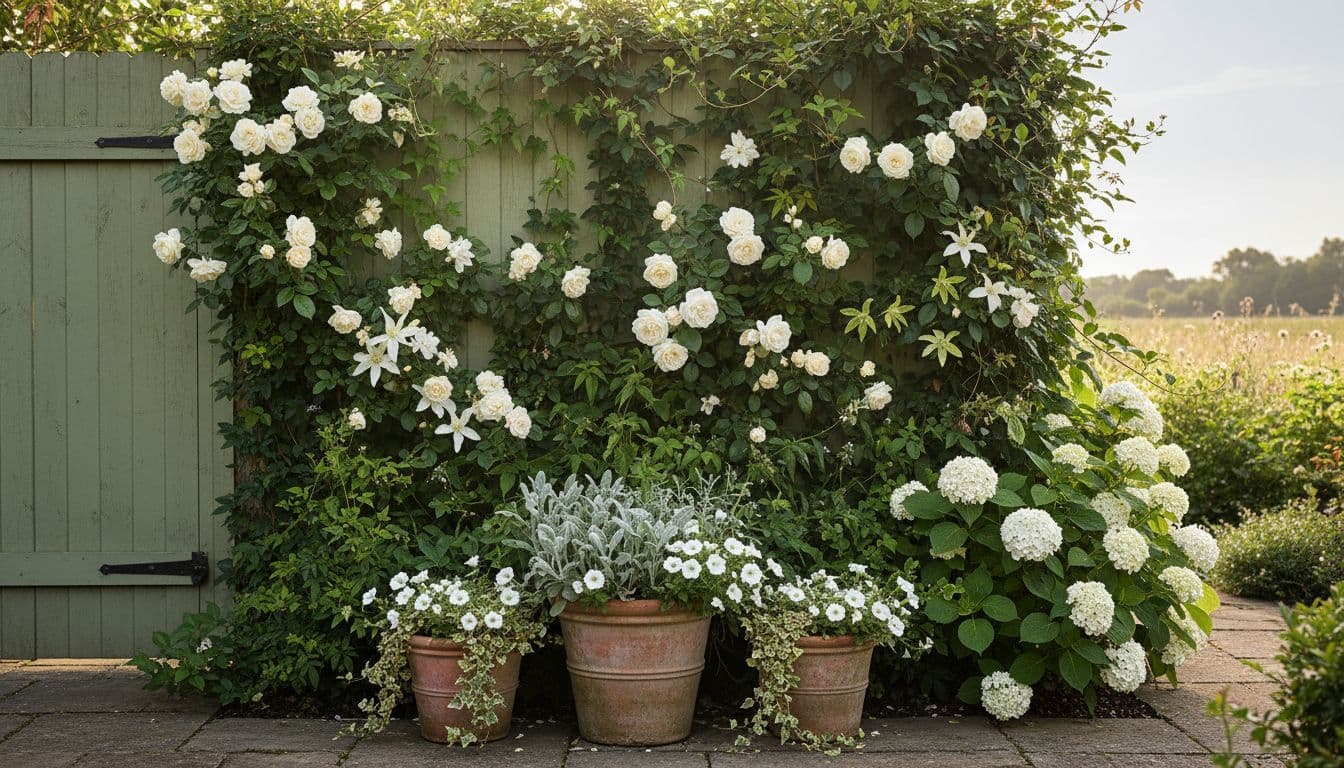
Good vertical garden design starts with the structure behind the plants, not the plants themselves. Pick the lightest system your wall or fence can safely carry (a trellis with climbers beats a heavy living-wall panel on most fences), plan how it will be watered, and only then choose plants matched to the sun it will get. Done in that order, a vertical garden can turn a bare boundary into the greenest part of a small yard.
What Does Vertical Garden Design Involve?
Vertical garden design covers everything from a single clematis on a trellis to a fully irrigated living wall. The Royal Horticultural Society splits it into two approaches: direct greening, where climbers or wall shrubs are planted at the base and grow up the surface, and indirect greening, where wires, trellis or a frame is fixed to the surface first and plants are trained onto it. For most homeowners, that distinction is the first real decision, because it determines weight, cost and upkeep.
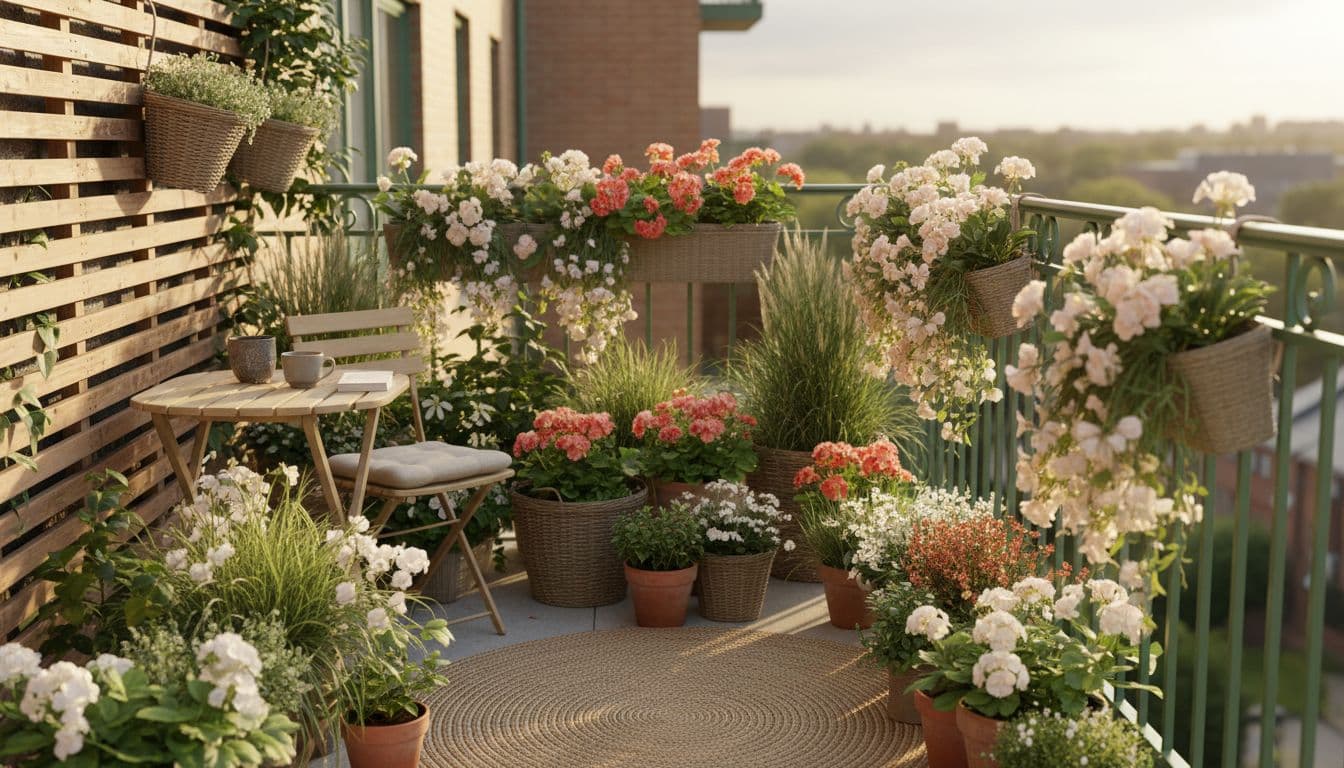
It matters most in compact yards. When ground area is limited, a boundary wall or fence is the biggest unused surface you own. If you are working with a tight footprint, our guide to AI garden design for a small backyard shows how vertical planting fits into a zoned layout, and balcony gardens rely on exactly the same principles at smaller scale.
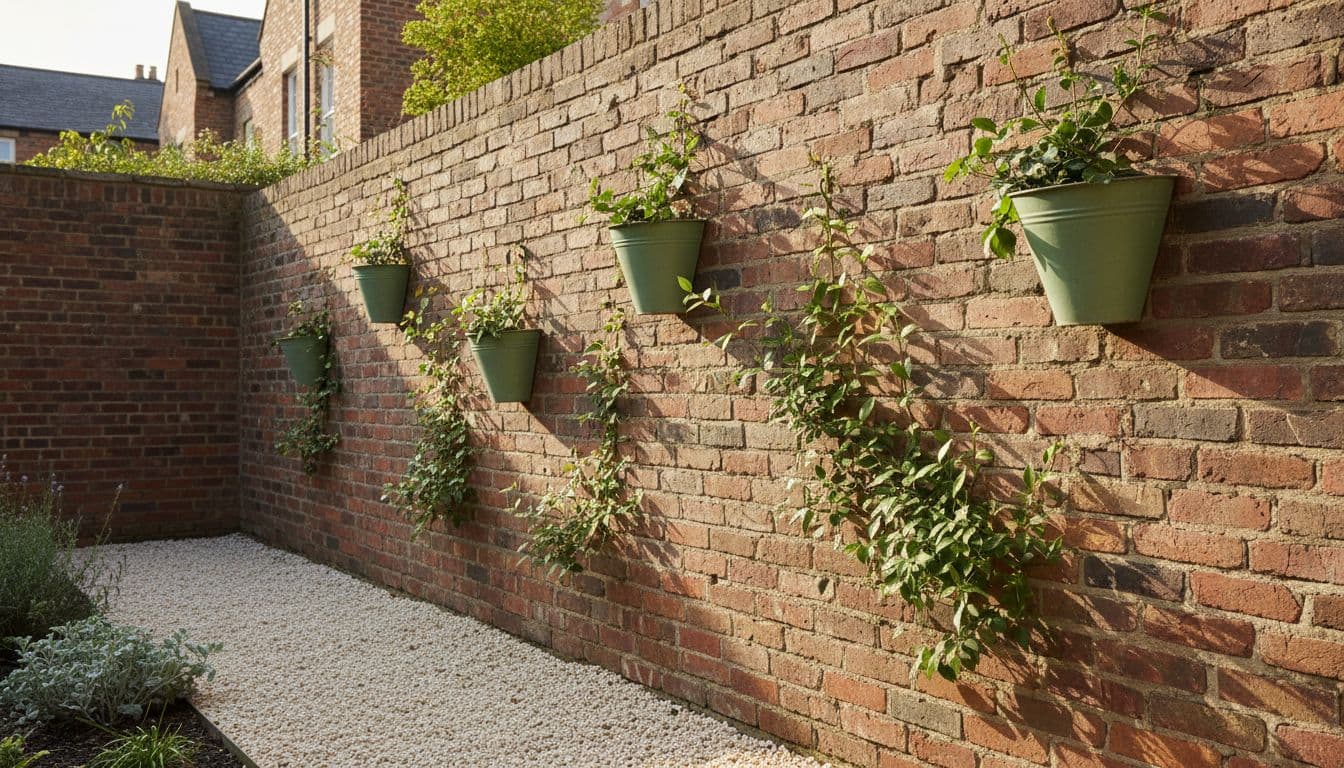
Which Vertical Garden System Is Right for Your Wall or Fence?
There are four common systems, and they differ mainly in weight, effort and how much water they need. Weights below are typical figures for a fully planted, saturated system; they vary between products, so always check the manufacturer's saturated rating.
| System | Typical saturated weight | Water need | Best for |
|---|---|---|---|
| Trellis or wires with climbers | About 5-10 kg/m2 (1-2 lb/sq ft) | Low; watered at the base | Fences, walls, almost any yard |
| Felt or fabric pocket panels | About 10-20 kg/m2 (2-4 lb/sq ft) | High; needs drip irrigation | Sheltered walls with a solid backing |
| Modular planter panels | About 35-45 kg/m2 (7-9 lb/sq ft) | Medium to high | Masonry walls and freestanding frames |
| Stacked or tiered planters | About 35-50 kg/m2 (7-10 lb/sq ft) | Medium; hand or drip | Patios, balconies, fence lines with a base |
The takeaway: for a typical timber fence, climbers on a trellis are the safe default, and anything heavier should stand on its own frame or be fixed to solid masonry. Always confirm the load rating of the wall and have a structural engineer assess heavy systems.
How Much Weight Can a Wall or Fence Safely Hold?
A garden fence is built to resist wind and hold itself up, not to carry hundreds of kilograms of wet soil. Fence panels and thin posts can fail under a saturated living-wall system, and a mature climber adds weight and wind load of its own. The RHS also notes that on wooden fences, mature climbers trap moisture and shade against boards and rails, so timber needs checking more often.
- Check the structure first. Look for rot at post bases, loose rails and leaning panels before attaching anything.
- Use a freestanding frame for heavy systems. A frame set in the ground, a few centimetres off the fence, carries the load without stressing the fence.
- Fix to masonry where possible. Brick or block walls in good condition carry modular panels and trellis far better than a fence.
- Leave an air gap. Fixing supports about 5 cm (2 in) off the surface, as the RHS recommends, lets air move behind plants and keeps the surface drier.
- Account for wind. A planted panel catches more wind than a bare fence, so anchor to posts rather than boards.
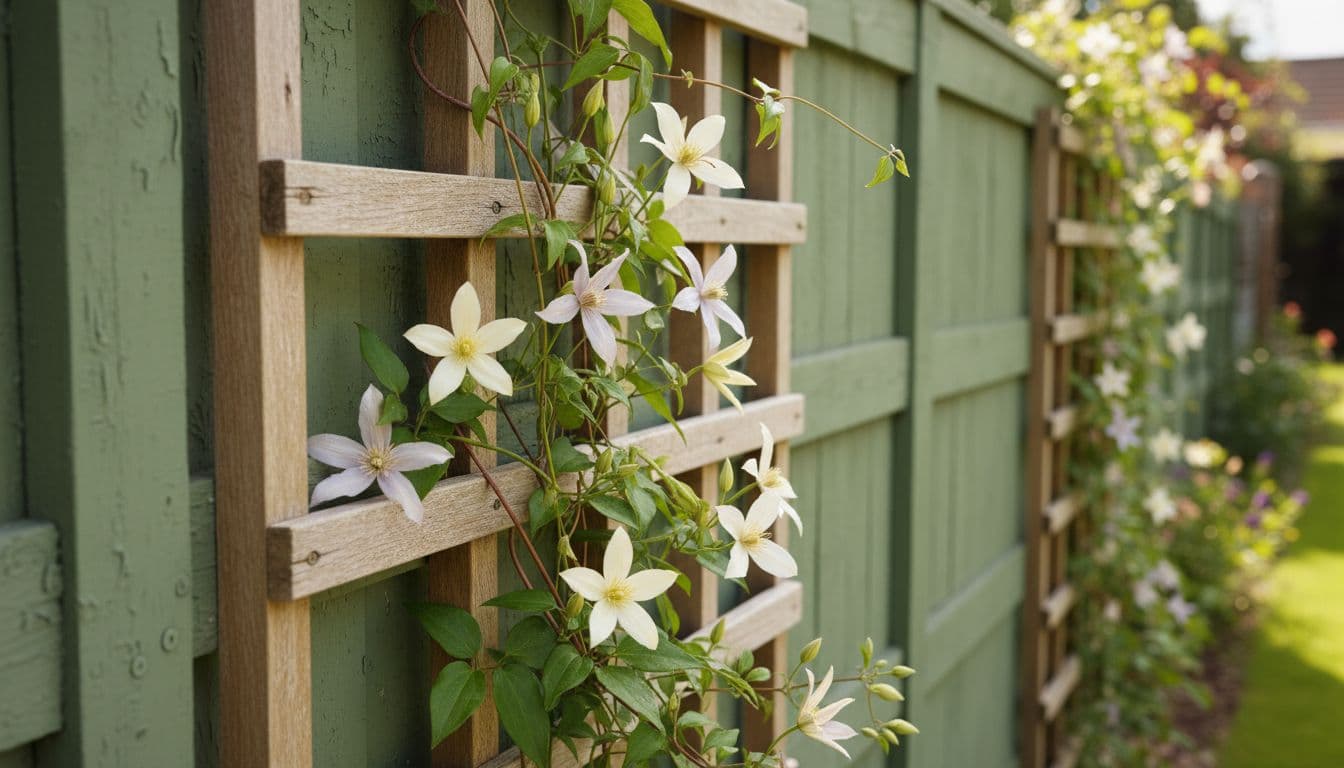
How Do You Build a Trellis or Wire System for Climbers?
A trellis or wire system is the cheapest, lightest and longest-lasting way to go vertical, and the RHS gives clear rules for it. Fix supports before you plant, because pushing wires in behind established stems is awkward and risks damage.
- Fix battens to the wall or fence so the trellis sits about 5 cm (2 in) away from the surface.
- Keep the bottom of wooden trellis about 30 cm (1 ft) above soil level so it does not sit in damp ground and rot.
- For wires, space them 30-45 cm (12-18 in) apart, with the lowest wire about 30 cm (1 ft) above the soil, using vine eyes and tensioned galvanised or stainless wire.
- Plant about 45 cm (18 in) away from a solid wall, angling stems in toward the support, because the soil next to a wall is often dry from rain shadow.
- Tie in new growth regularly with soft ties; climbers such as roses will not attach by themselves.
Match the support to the climber. Plants with tendrils, such as passionflower and grapevine, grab wires and trellis on their own, while climbing roses need tying in. Only a few, including ivy, Virginia creeper and campsis, cling directly to vertical surfaces, which is exactly why they should be kept off weak mortar and timber.
Which Plants Work Best in a Vertical Garden?
Choose plants for the aspect of the wall first. A south-facing wall is hot and dry in summer, a north-facing wall stays cool and shaded, and the plants that thrive in one rarely tolerate the other.
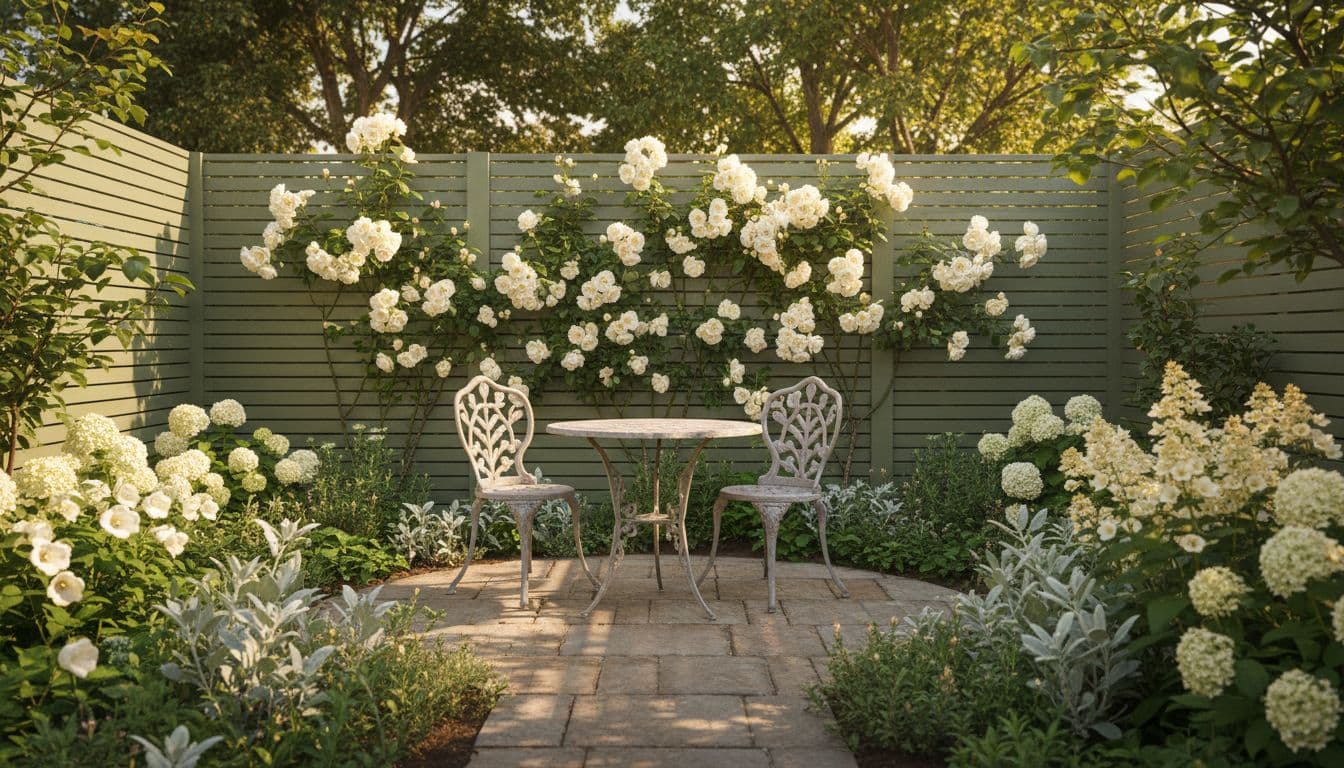
- Clematis is a versatile starter climber for fences and trellis in sun or part shade; keep its roots cool and shaded at the base.
- Climbing hydrangea (Hydrangea anomala subsp. petiolaris) suits shady north or east walls, but it is heavy and slow, so it needs a solid support.
- Ivy cultivars such as 'Glacier' or 'Eva' tolerate shade and bring evergreen cover, but they cling to surfaces, so use them on sound masonry only.
- Passionflower (Passiflora caerulea) gives bold flowers on a sunny, sheltered wall and attaches itself by tendrils.
- Climbing roses provide scent and flowers, and need regular tying in to a trellis or wires.
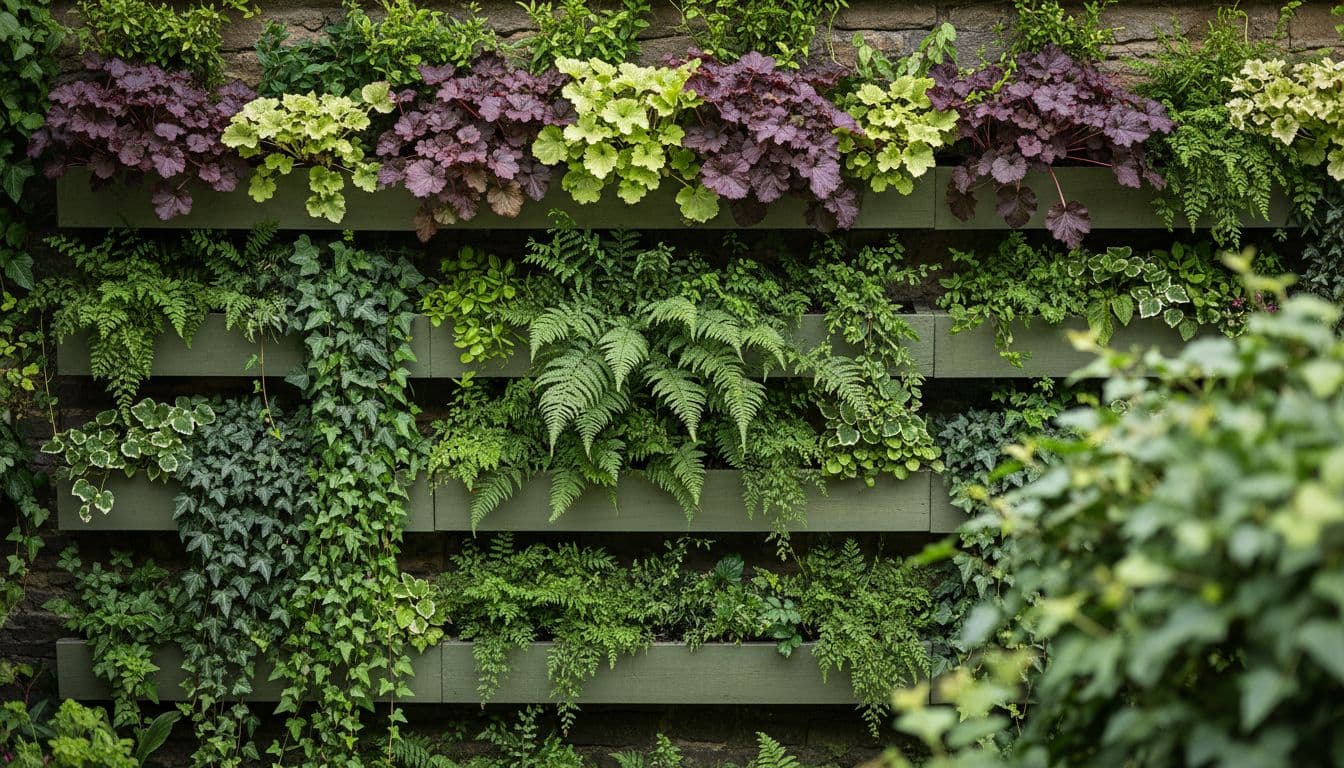
- Pocket-panel plants such as heuchera, hardy ferns and trailing sedum suit living-wall pockets, depending on light.
Hardiness matters too. Check your local zone on the USDA Plant Hardiness Zone Map or the equivalent for your country before buying, and favour evergreen cover if you want a green boundary in winter.
How Do You Water a Vertical Garden?
Climbers planted in the ground can usually be watered at the base like any shrub, though soil beside a wall dries out, so water deeply in the first season. Pocket panels and stacked planters are different: they hold little soil, and plants high on a sunny wall dry out quickly. Most designers therefore pair them with drip irrigation on a timer.
As a rough planning guide, living walls in temperate climates are often estimated to use around 1-3 litres per square metre per day in summer, and more on a south-facing wall. Treat that as an estimate, not a promise: climate, plant choice and substrate change the real figure. Whatever the method, plan for drainage at the base so water does not pool against the wall, and use a water-tolerant surface below.
See your own wall before you build
Upload a photo of your wall or fence to FlorAI and preview trellis, climbers and living-wall layouts on your real space, before you spend anything on materials.


Version 1.1.1 · 132 MB
Can AI Help You Plan a Vertical Garden?
Yes, AI is useful for the visual part of the job: seeing how a trellis, a row of planters or a green wall will look against your actual fence and paving. FlorAI works from a photo of your real space, so the wall height, colour and boundary line stay in the result. It will not replace a structural check on a heavy system, but it makes it much easier to compare options and avoid expensive mistakes. The same photo-first approach is covered in AI garden design from a photo.
A simple workflow is to photograph the wall in good light, test two looks (for example, a clematis trellis against a pocket-panel wall) in the before-and-after gallery style, and then pick one. You can explore style directions in the garden styles section, and the best AI garden design app guide explains what to look for in a tool.
What Mistakes Should You Avoid?
- Hanging heavy panels on a flimsy fence. Check the load rating or use a freestanding frame.
- Planting before the supports are up. Fix trellis and wires first.
- Ignoring the aspect. A sun-loving climber on a north wall will sulk; match plants to light.
- Skipping irrigation on pocket systems. Hand watering rarely keeps up in summer.
- Letting ivy or other self-clingers loose on weak surfaces. Keep them to sound masonry and trim regularly.
Start small: one well-supported climber on one section of wall teaches you the light, the watering and the maintenance before you commit to a larger system.
Vertical Garden Design: Frequently Asked Questions
What is the easiest vertical garden to start with?
A trellis or wire system with one or two climbers, such as clematis, is the easiest and lightest option. It needs little water beyond watering at the base and adds only around 5-10 kg per square metre, according to typical figures.
Can I attach a living wall to a wooden fence?
Usually not directly. Saturated modular or planter systems are heavy, so they should stand on their own frame or be fixed to solid masonry. Light trellis with climbers is generally the safe choice for a fence.
How far should a trellis sit from the wall or fence?
The RHS recommends fixing supports about 5 cm (2 in) away from the surface, using battens, so air can circulate and stems have room to grow.
Which climbers grow well in shade?
Climbing hydrangea (Hydrangea anomala subsp. petiolaris) and ivy cultivars such as 'Glacier' or 'Eva' tolerate shade. Ivy clings to surfaces, so use it on sound masonry only.
Do vertical gardens need irrigation?
Climbers in the ground can be watered at the base, but pocket panels and stacked planters dry out fast and usually need drip irrigation on a timer. Temperate-climate living walls are often estimated at about 1-3 litres per square metre per day.
Can FlorAI design a vertical garden for my wall?
FlorAI generates garden designs from a photo of your real space, so you can preview trellis, climbers and planted walls on your own fence or wall. It helps with the visual design, but heavy systems still need a structural check.
Sources
- How to grow climbers and wall shrubs — Royal Horticultural Society,
- Green walls: vertical gardening ideas — Royal Horticultural Society,
- 10 garden trellis ideas for vertical gardening — BBC Gardeners' World Magazine,
Read next