AI Garden Design for Balcony Spaces: Weight, Wind and Privacy Done Right

Garden design writer at FlorAI
Updated · 9 min read
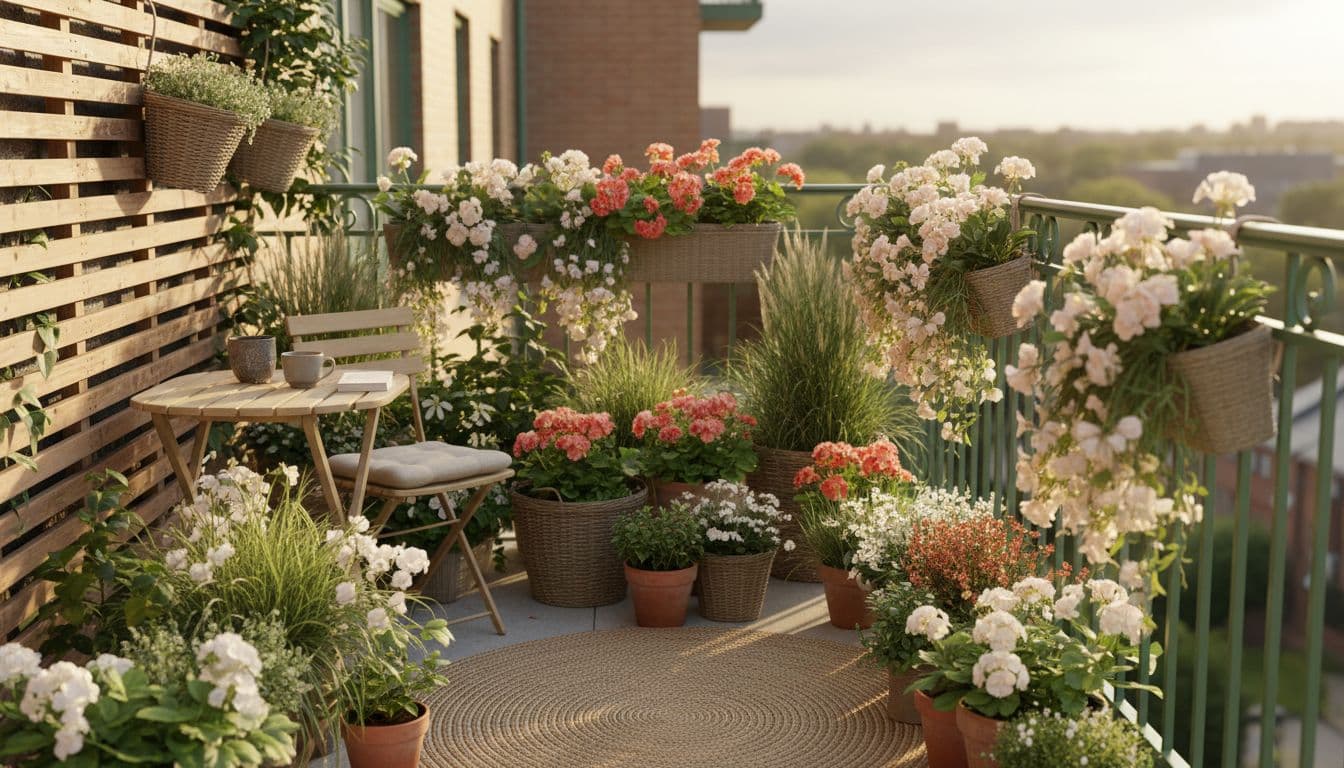
AI garden design for balcony spaces takes a single photo of your railing, floor and view and turns it into a photorealistic layout in about a minute — the same process as a full garden redesign, scaled down to the constraints that actually matter on a balcony: how much weight the structure can carry, how deep each container needs to be, how hard the wind hits at that height, and how to get privacy without losing the light. FlorAI runs that process end to end, which is why it is used as the working example throughout this guide.
What Makes AI Garden Design for Balcony Spaces Work?
The same principle that makes any AI garden redesign useful applies here, just at a smaller scale: the tool has to work from your actual space, not a generic balcony template. A photo taken standing at your own railing captures the real width of the floor, the height and style of the railing itself, how much sun reaches which corner, and what is visible on the other side — the view you want to keep and the sightline you want to block. AI garden design from a photo covers the mechanics of that process in more depth; on a balcony, the same upload-a-photo, generate-a-layout flow simply has less room for error, because every container has to earn its spot. FlorAI's full capability list, including style options suited to compact spaces, is on the AI garden design features page.
Is Your Balcony Strong Enough for a Container Garden?
This is the question to answer before buying a single pot, and it is a structural one, not a design one. Balconies are only able to take a certain weight, and the Royal Horticultural Society is direct about it: if you are not sure what your balcony can carry, ask a chartered structural engineer or a surveyor to confirm what is possible. A wet, fully planted container garden is heavier than it looks — soil-based composts like John Innes No. 3 hold their nutrients longer but weigh more than multi-purpose peat-free mixes, and that difference adds up fast across a dozen pots.
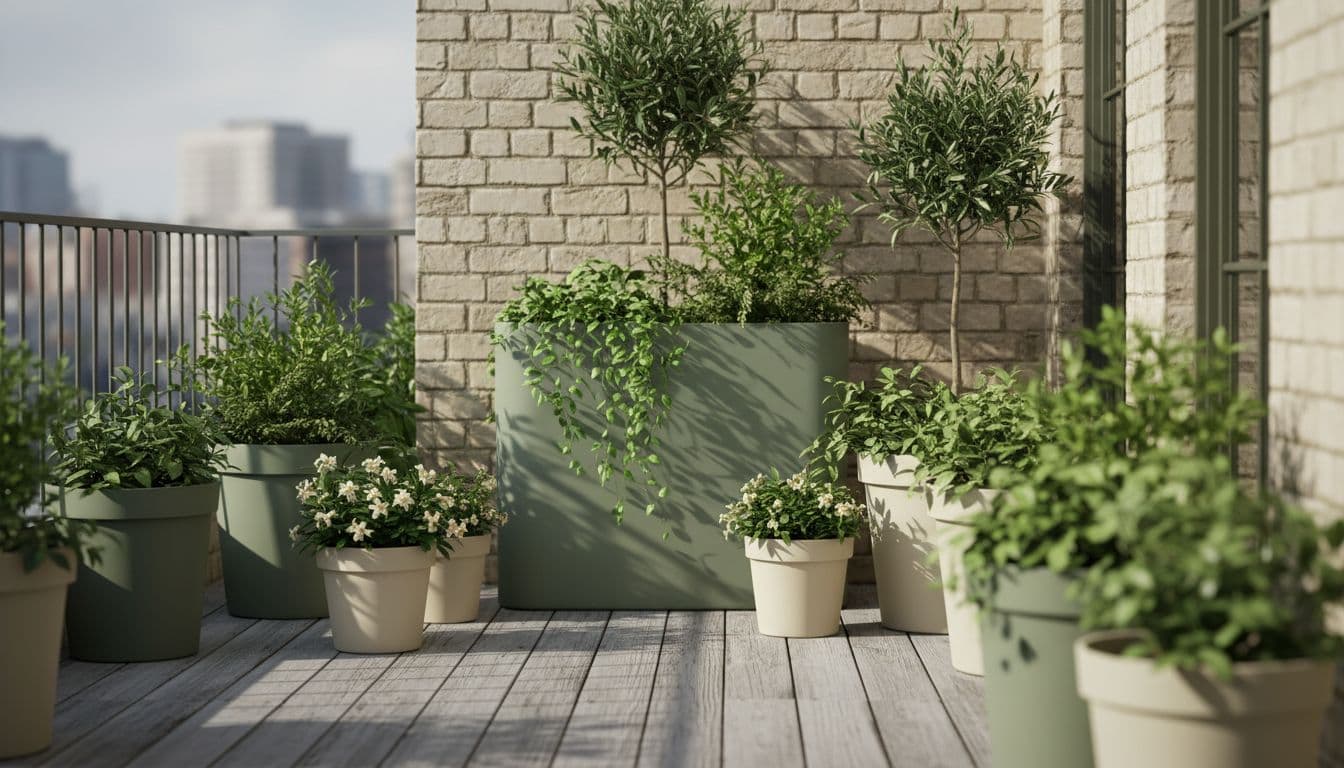
- Choose lightweight, non-porous containers. Fibreglass, plastic and lightweight metal pots weigh less than terracotta or stone and, being non-porous, also lose moisture more slowly, so they need less frequent watering.
- Cut compost weight where you can. A layer of polystyrene in the base of a large container aids drainage and reduces weight compared with traditional crocks, and multi-purpose peat-free compost is lighter than a soil-based mix like John Innes.
- Position heavy containers deliberately. Place them near load-bearing walls or over a load-bearing beam or joist, since these points can take more weight than an unsupported span of floor or railing.
- Favour fewer, larger containers over many small ones. Large containers hold more compost, dry out more slowly and are genuinely easier to look after, so the weight is doing more work per pot.
How Deep Does a Container Need to Be?
Depth is not a style choice, it is a root-space requirement, and it varies by plant far more than most balcony shopping lists admit. A shallow trough that suits sempervivums will starve a tomato, and a container deep enough for a climbing rose is overkill — and unnecessary extra weight — for a tray of salad leaves. The table below uses figures from Royal Horticultural Society guidance on containers as a starting point for sizing an AI-generated layout against real pots you can actually buy.
| Plant type | Minimum container depth | Notes |
|---|---|---|
| Patio and miniature roses | 23–35cm (9–14in) | Bred specifically for container growth; among the few roses that tolerate confined roots well. |
| Ground cover and climbing roses | 30–45cm (12–18in) | Less vigorous, more compact varieties only; needs a wide as well as deep pot. |
| Vegetables (beans, tomatoes, potatoes) | At least 45cm (18in) depth and width | Smaller containers dry out and run short of nutrients fast, forcing frequent feeding. |
| Herbs and salad leaves | 15–20cm (6–8in) | Shallow but frequent watering is non-negotiable in a small volume of compost. |
| Sempervivums and alpines | 10–15cm (4–6in), wide and shallow | Shallow, free-draining containers suit these naturally exposed, drought-tolerant plants. |
One size rule cuts across all of it: as a container gets larger it holds more compost, dries out more slowly and needs less frequent feeding, so it is usually easier — and often better for the plant — to use fewer, larger pots than many small ones for the same total planting.
How Do You Design for Wind on an Exposed Balcony?
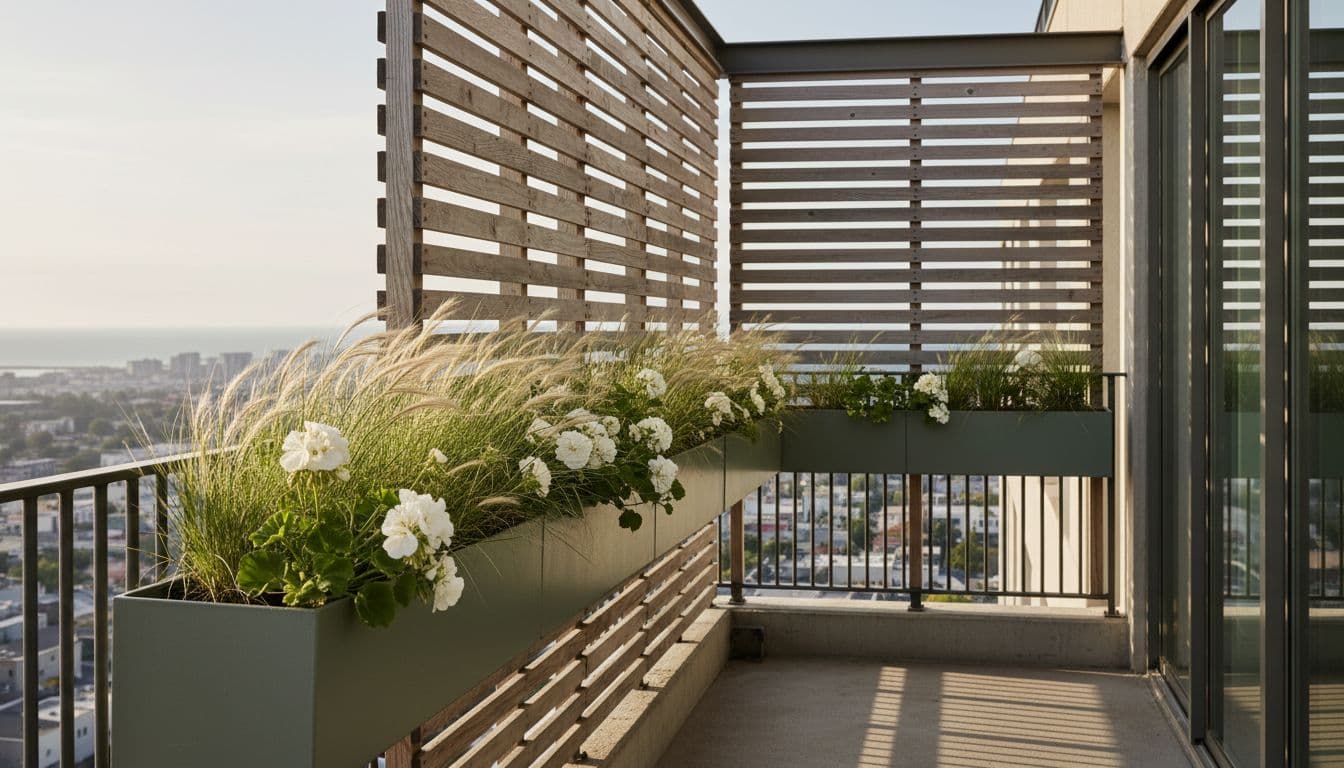
Height changes everything about wind. A ground-floor patio and a fourth-floor balcony can sit on the same street and experience completely different conditions, and the fix is not a solid wall — a solid screen creates turbulence on the far side, while a slatted or mesh screen filters the wind and slows it down instead. Containers matter as much as screening: anything tall and narrow is prone to being blown over, particularly once it carries a tall plant, so a low centre of gravity is the goal. Long, low troughs work especially well, and adding a layer of bricks or stones in the base of a taller pot helps stabilise it. Taller plants, climbers and anything trained up a trellis need to be fixed securely to the railing or wall rather than left to stand free.
- Ornamental grasses, such as *Calamagrostis x acutiflora* 'Karl Foerster', have narrow leaves that let wind pass through instead of catching it, and they hold their structure well into winter.
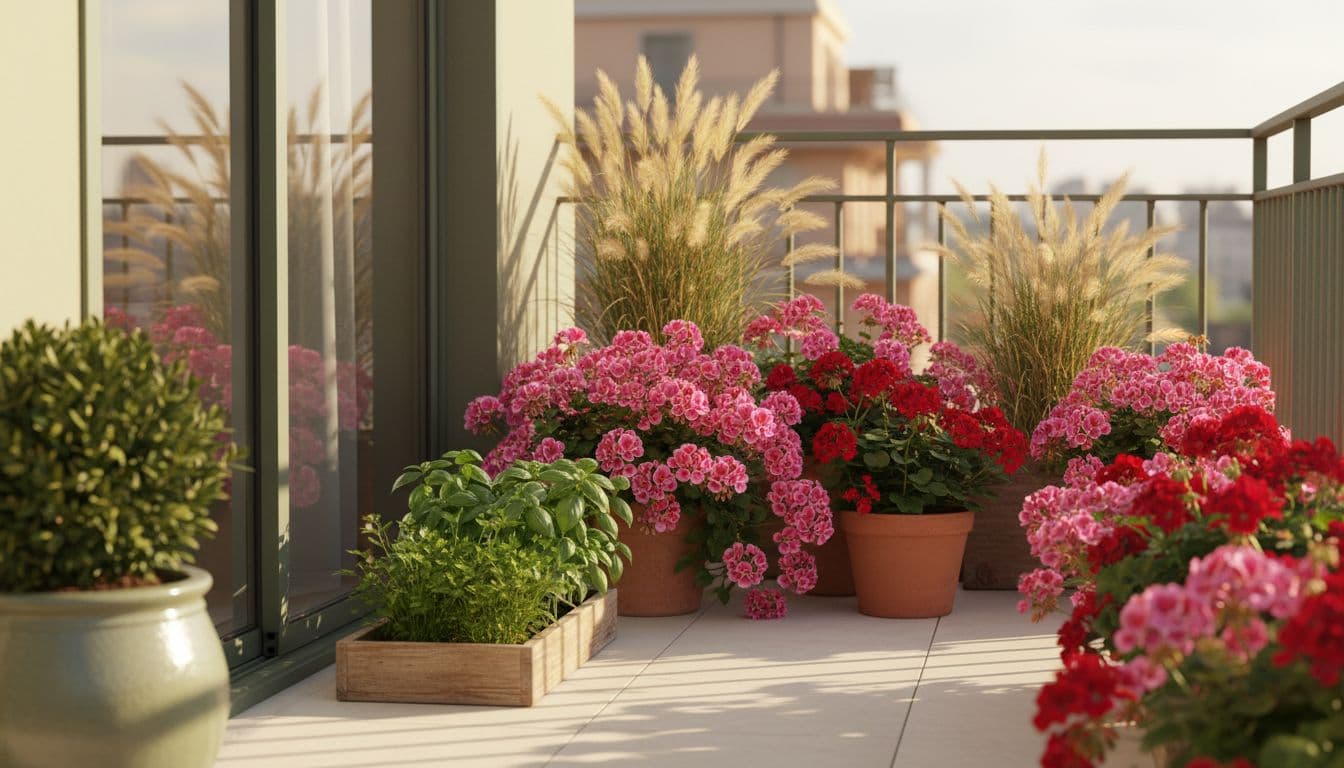
- Pelargoniums are tough, flower for months and are among the plants the Royal Horticultural Society specifically recommends for exposed rooftop and balcony conditions.
- Sempervivums (houseleeks) are succulents built for harsh, exposed spots and need almost no attention once potted correctly.
- Lavender and other plants with narrow, grey or waxy leaves are adapted to reduce water loss in wind and sun, which is the same trait that makes them wind-hardy.
- Plants labelled for coastal conditions are a reliable shortcut, since coastal exposure and balcony exposure demand similar toughness.
What's the Best Way to Add Privacy Without Blocking Light?
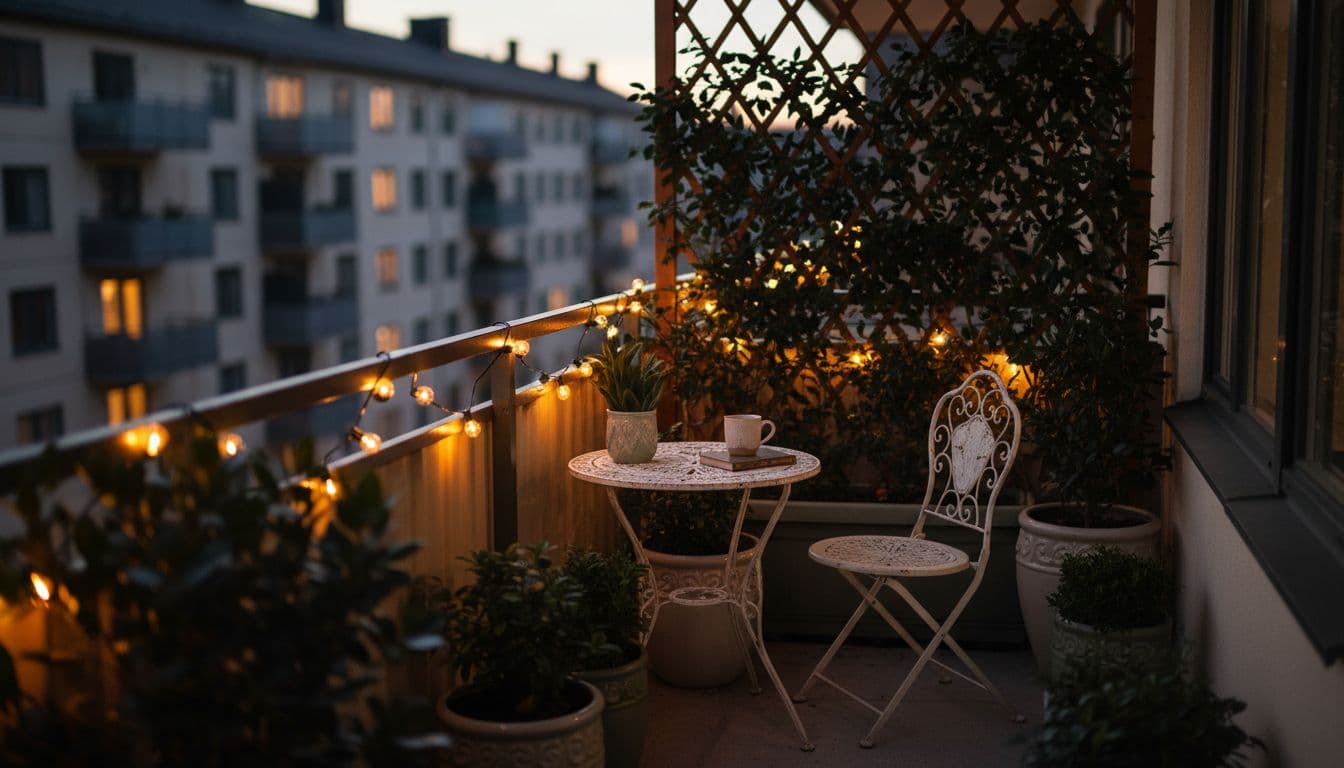
A solid panel solves privacy and creates two new problems: it blocks light and, as above, turns wind into turbulence instead of filtering it. A trellis carrying a climbing plant does both jobs better — it screens a sightline gradually as the plant fills in, while still letting light through the gaps. Star jasmine (*Trachelospermum jasminoides*) is a strong option for this: an evergreen, twining climber rated hardy to RHS zone H4, it grows slowly at first but can reach 4m (13ft) or more once established on a support, and it stays in leaf year-round rather than leaving a bare trellis every winter. For a faster but less permanent screen, slatted panels alone — the same filtering logic as the wind screens above — cut sightlines without the solid-wall downsides. Either way, an AI-generated layout can test where a screen actually needs to sit before you buy the trellis or the plant, by showing the sightline from the seat you actually use.
Test your own balcony before you buy a single pot
Upload a photo of your balcony and generate a layout that accounts for your real railing, floor space and light. FlorAI's first AI garden design is free, on iPhone, Android and web.


Version 1.1.1 · 132 MB
Which Plants Actually Thrive on a Balcony?
Combine the constraints above — weight, depth, wind and light — and a workable planting list emerges naturally rather than by trend. The Royal Horticultural Society's advice on greening balconies and roof gardens points to plants that are both drought and wind tolerant, since containers dry out faster than open ground and exposure is usually higher than at street level.
- Pelargoniums (geraniums) for long-flowering colour that shrugs off wind and irregular watering.
- Sempervivums and other succulents for the driest, most exposed corner, where almost nothing else survives neglect this well.
- **Dense evergreens like *Viburnum tinus*** in a large, stable container to create a wind-sheltered pocket for more delicate plants behind it.
- Phormiums and cordylines for year-round structural interest that does not collapse over winter the way soft perennials can.
- Herbs — parsley, basil, coriander — in shallow containers near the door, for a genuinely useful crop from a small footprint.
- Salad leaves and dwarf vegetables in a container at least 45cm deep and wide, for anyone who wants the balcony to produce food, not just look good.
- Patio or miniature roses where full sun reaches at least half the day, since roses need real light to perform in a container.
How Should You Water and Feed Container Plants?
Container plants are more dependent on you than plants in open ground, because their entire root system sits in a small, exposed volume of compost that heats up, cools down and dries out faster than garden soil. In warm, windy weather, containers may need watering once or even twice a day, and smaller pots dry out fastest of all — another reason to favour fewer, larger containers over a scattering of small ones. Non-porous containers like plastic and fibreglass lose moisture more slowly than terracotta, which helps on a balcony where running a hose out to every pot usually is not an option. A slow-release fertiliser mixed into the compost at planting time, topped up through the growing season, covers most of what container plants need beyond water, since they cannot draw on reserves the way plants rooted in open ground can.
Putting It Together: A Small Balcony That Works
A balcony that actually gets used, rather than just photographed once, tends to follow the same order every time: confirm the weight limit first, then size containers to the plants that will fill them, then handle wind with screening and a low centre of gravity, then close the sightlines that matter with a living screen instead of a solid one. Testing that sequence against your own photo, rather than a Pinterest board of someone else's roof terrace, is the difference between a plan you can actually buy and one that only ever exists as an image. For a related small-footprint approach, AI garden design for a small backyard covers the same zoning logic at ground level, and AI patio design ideas is useful if your outdoor space is a ground-floor slab rather than a railed balcony.
Frequently Asked Questions
How much weight can a balcony hold for container gardening?
It depends entirely on the building, and there is no universal number safe to rely on. The Royal Horticultural Society recommends asking a chartered structural engineer or surveyor to confirm what your specific balcony can carry before filling it with containers, then placing any heavy pots near load-bearing walls or over a load-bearing beam or joist rather than on an unsupported span.
How deep should a balcony planter be?
It depends on what you are growing. Patio and miniature roses need 23–35cm (9–14in), ground cover and climbing roses need 30–45cm (12–18in), vegetables generally need at least 45cm (18in) of depth and width, and herbs or salad leaves can manage with 15–20cm (6–8in), according to Royal Horticultural Society guidance.
What plants survive windy balcony conditions best?
Plants with narrow, grey or waxy leaves cope best because they lose less water in wind, which is why ornamental grasses, pelargoniums, sempervivums and lavender are commonly recommended for exposed balconies and roof gardens. A low centre of gravity in the container matters as much as the plant choice — long, low troughs are far more stable than tall, narrow pots.
How do you get privacy on a balcony without blocking the light?
Use a trellis with a climbing plant, or a slatted rather than solid screen. Both filter a sightline instead of creating a hard wall, and a slatted screen also filters wind rather than causing turbulence on the far side. Star jasmine (Trachelospermum jasminoides), an evergreen climber, is a workable choice since it stays in leaf year-round once established.
Can an AI garden design app work with a small balcony photo?
Yes — the same photo-to-layout process used for a full garden works on a balcony, and having less space actually makes an accurate real-photo redesign more useful, since every container has to be sized and placed deliberately. FlorAI generates a free first design from a balcony photo on iPhone, Android and web.
AI garden design for a balcony works best as the first step, not the whole process: it turns a photo of your actual space into a layout you can react to, then the structural check, the container depth table and the wind and privacy strategy above turn that layout into something you can safely build. FlorAI runs the first step for free on iPhone, Android and web, so testing your own balcony costs nothing but the photo.
Sources
- Greening balconies and roof gardens — Royal Horticultural Society,
- Growing plants in containers: Expert Guide — Royal Horticultural Society,
- Vegetables in containers — Royal Horticultural Society,
- Roses: growing in containers — Royal Horticultural Society,
Read next