AI Garden Design for Small Backyard Spaces: Making Every Metre Work

Garden design writer at FlorAI
Updated · 9 min read
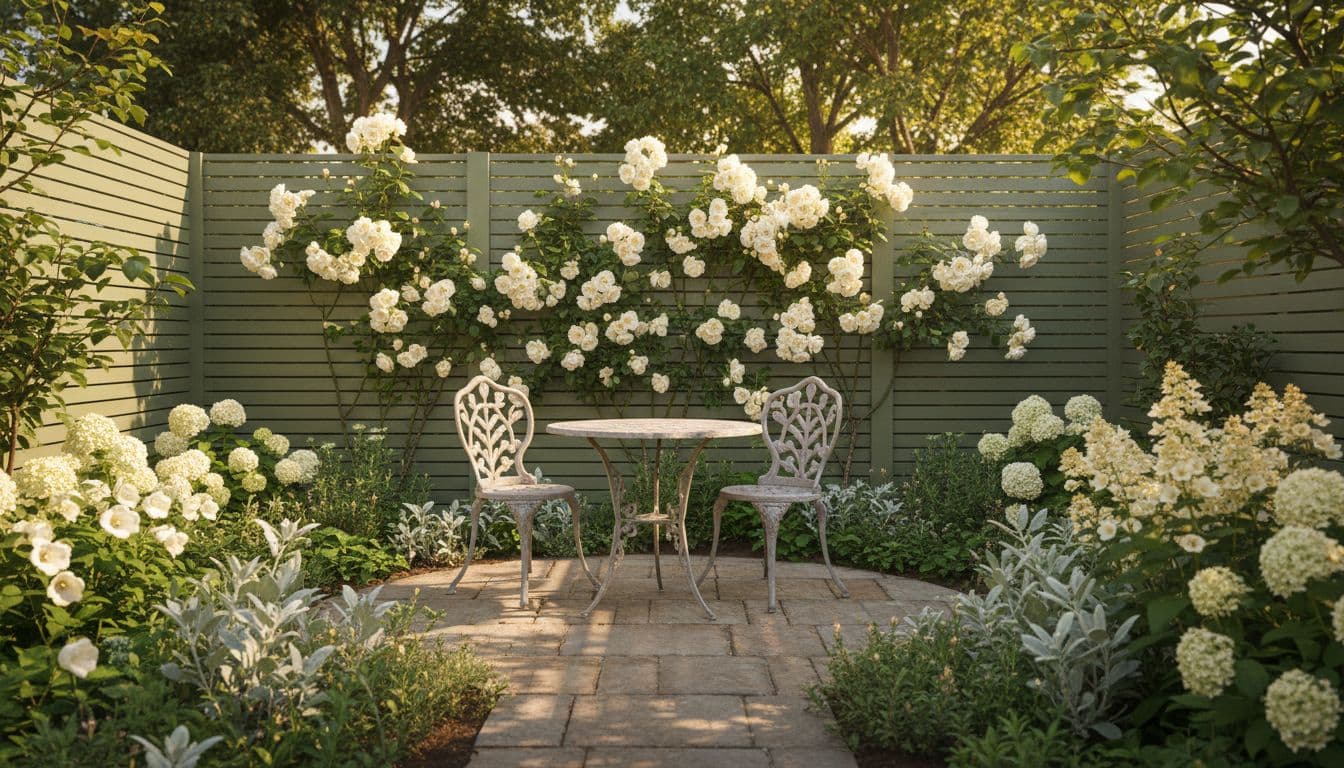
AI garden design for small backyard spaces works best when it treats limited square footage as a design constraint to solve, not a problem to apologize for. Upload a photo of your actual space — even one under 40 m² (430 sq ft) — and a tool like FlorAI can propose zoning, vertical planting and multi-use furniture sized to fit, instead of the same layout it would suggest for a quarter-acre lot. The short version: zone first, plant vertically, pick furniture that does two jobs, and check every plant's mature size before you buy it.
Why Does AI Garden Design for Small Backyard Spaces Need a Different Approach?
A design that looks great on a half-acre plot usually fails on a 20–35 m² backyard, because the mistakes get magnified. One oversized shrub can dominate the whole view. One badly placed table can block the only path to the back gate. The fix is not fewer ideas — it is scaling every decision to the space: shorter sightlines, denser but smaller planting, and furniture and structures picked for their footprint first and their looks second. This is also where photo-based AI design earns its keep: it keeps your actual fence line, wall height and patio slab in the result, so what you see is something you could build in your real yard, not a generic "small garden" template. If you are still comparing tools generally, the best AI garden design app guide covers the criteria that matter regardless of yard size.
How Do You Zone a Small Backyard?
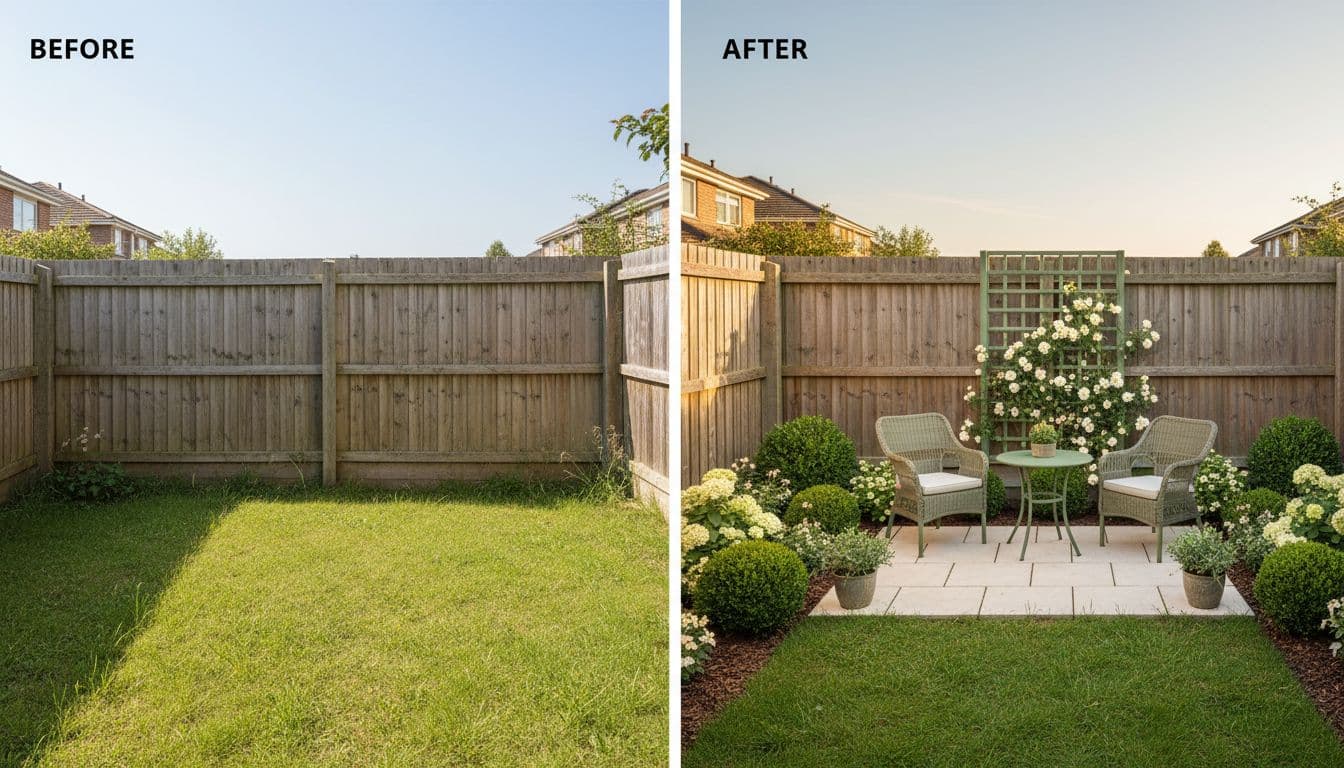
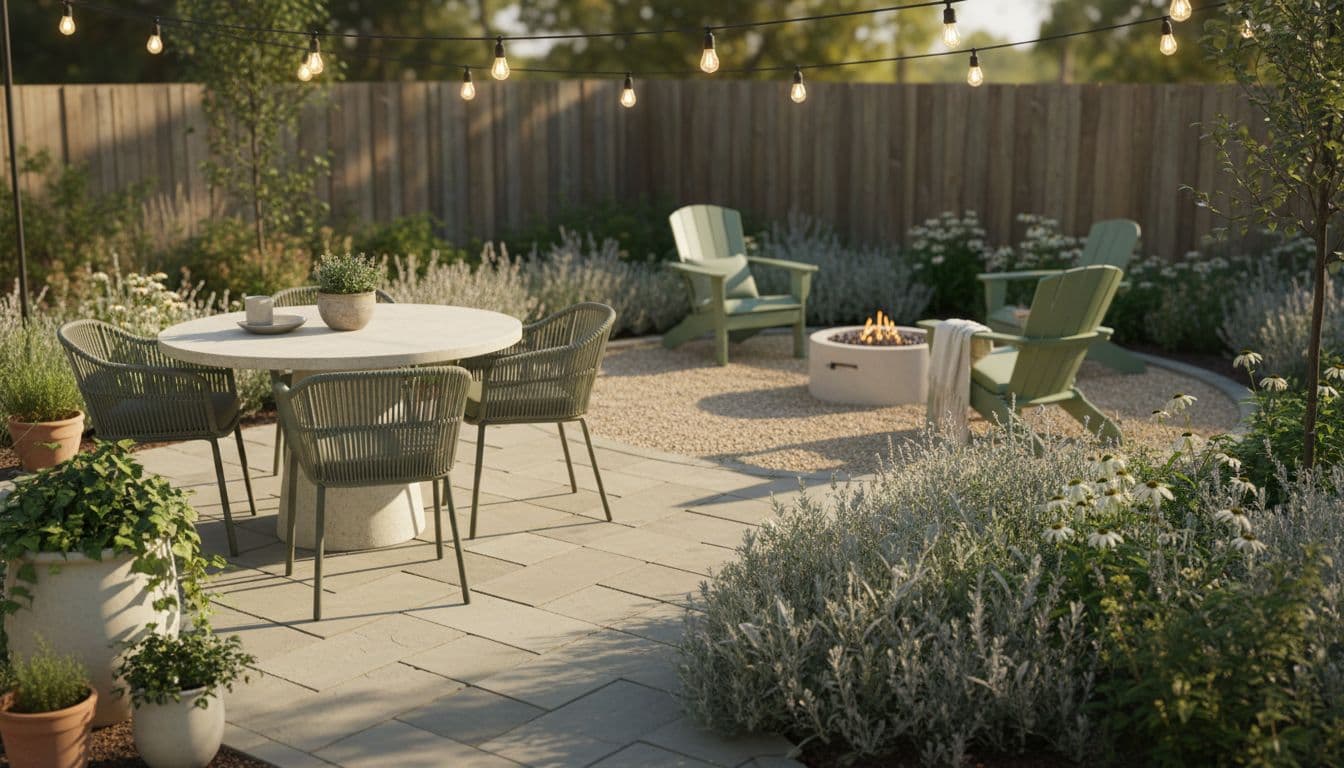
Zoning means deciding, before any planting goes in, which parts of the yard do what — dining, lounging, growing, storage — so the space reads as several small rooms instead of one cluttered rectangle. In a compact backyard, that usually means two zones, not four, plus a clear route between them.
- Walk the space and mark the one or two things you actually do outside — eat, sit, garden — and design only for those.
- Put the largest zone against the house so it reads as an extension of the indoor room, not a separate destination.
- Keep one continuous sightline from the back door to the far boundary, even if beds interrupt the sides.
- Use a change of material, not a wall, to divide zones — a paved dining area meeting a gravel or planted lounging area reads as two rooms without losing width.
- Leave at least 90 cm (3 ft) of clear path width anywhere you need to walk with tools, a bin or a chair.
What Vertical Planting Ideas Work Best in Small Spaces?
Layering plants so the eye moves upward — low groundcover at the front, mid-height shrubs in the middle, and a trellis, arch or wall-trained climber at the back — makes a narrow bed feel deeper than it is. It also means you get more actual plant volume per square metre of soil, which matters when that soil is scarce.
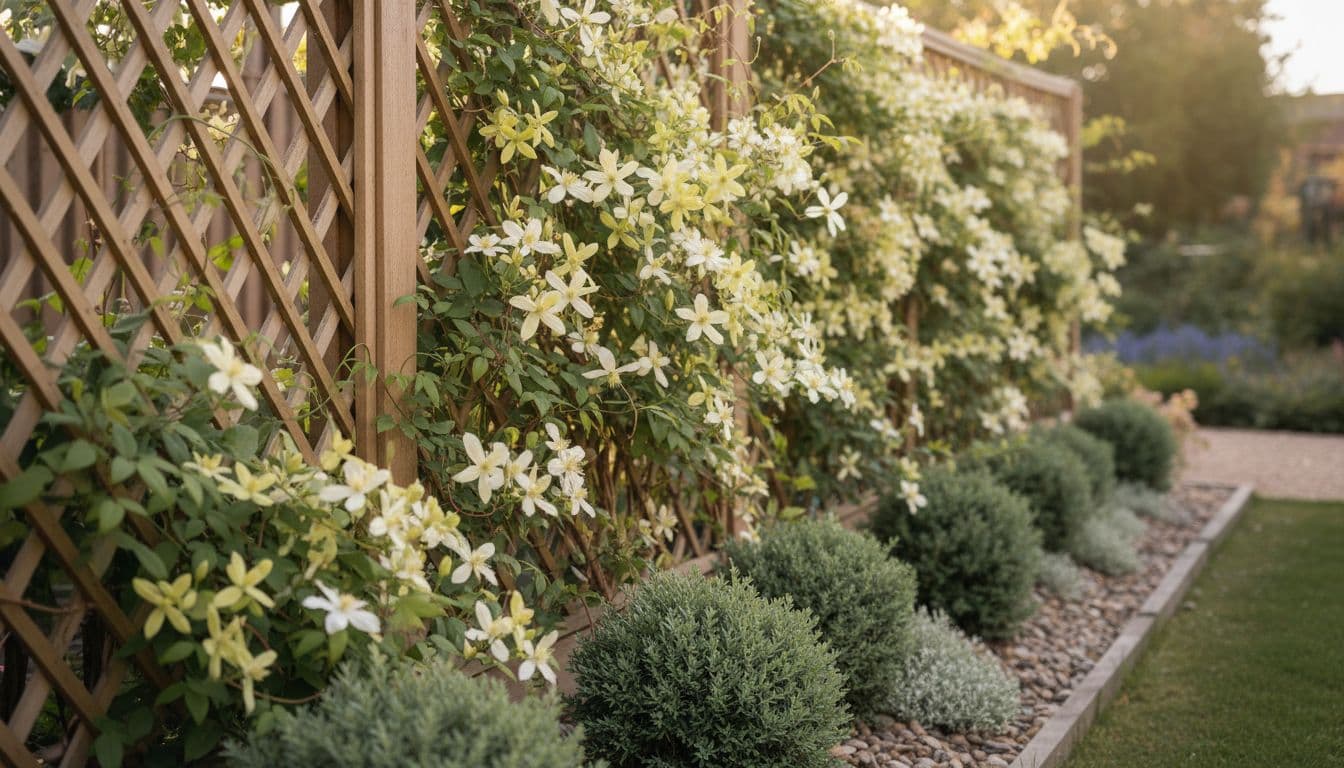
- A simple [trellis or wire system](https://www.gardenersworld.com/how-to/grow-plants/garden-trellis-ideas/) against a fence turns a flat boundary into growing space without taking any floor area.
- Compact clematis cultivars are bred to stay roughly 1.2–1.8 m (4–6 ft) tall, so they work on a patio trellis or wall-mounted frame rather than swallowing a full fence panel.
- A repeat-flowering climbing rose such as 'New Dawn' is compact enough for a small-garden support while still producing generous flushes of scented bloom through summer.
- Wall-mounted planters or a ladder shelf stack herbs or trailing plants in the same footprint a single ground-level pot would use.
It is also worth noting the practical upside: plants grown vertically on a trellis are generally easier to prune, harvest and inspect for pests than the same plant sprawling at ground level, because everything is at eye height instead of buried in a border.
Which Compact Plants Actually Stay Small?
The single most common small-garden mistake is buying a plant for the size of its nursery pot instead of its mature size. Always check the tag — or an independent source — for eventual height and spread before it goes in the ground. A few reliable options for compact backyards:
| Plant | Typical mature size | Best use |
|---|---|---|
| Hebe topiaria | Under 1 m (3 ft) high and wide | Low, naturally rounded hedge or specimen — needs little clipping |
| Osmanthus × burkwoodii | Slow-growing evergreen, scented white spring flowers | Structural evergreen backbone for a small border |
| Dwarf rhododendron cultivars | Compact, container-friendly | Spring colour in a shaded corner or large pot |
| Amelanchier lamarckii (multi-stem) | Small specimen tree, white spring blossom, autumn colour | Single focal tree where a full-size tree would not fit |
On hedging, be cautious with Ilex crenata (Japanese holly) as a box substitute: it was the most widely planted box alternative in the UK, but also, per RHS advisory data, the least reliably successful, since it dislikes winter wet and hot, dry summers. Hebe and Lonicera nitida (box honeysuckle) are more forgiving low-hedge alternatives for most small backyards.
Before buying anything, cross-check your local climate against the USDA Plant Hardiness Zone Map so a plant that reads as compact in a warmer zone is not also one that will struggle to survive your winter.
How Do You Choose Furniture for a Small Backyard?
In a small backyard, every piece of furniture should do at least two jobs, or it is just taking up floor space you cannot spare.
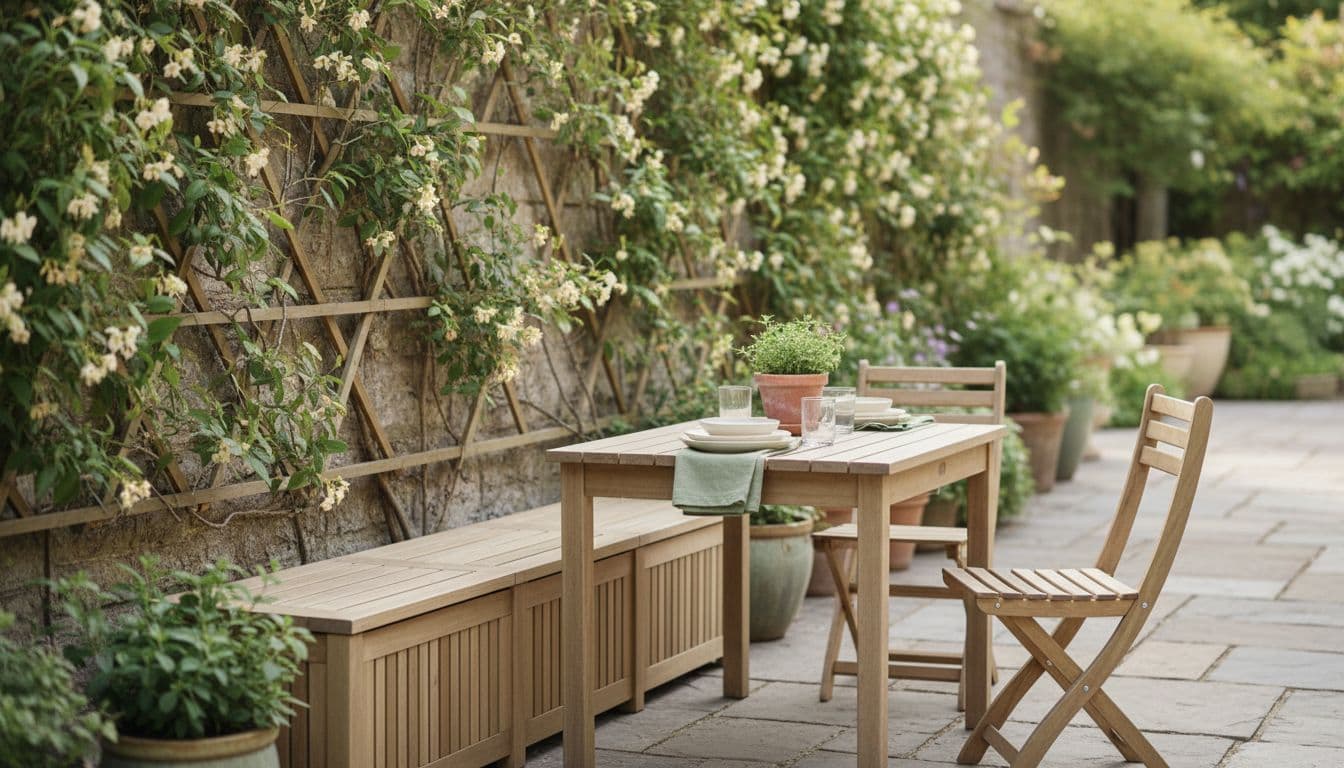
- A bench with storage underneath replaces both seating and a shed corner.
- A dining table narrow enough to double as a potting surface earns its keep outside of mealtimes.
- Folding or stacking chairs free up the whole zone when you actually need to move through it.
- Light-coloured or reflective materials (pale stone, mirror-finish planters) bounce light back into the space and make a narrow yard read as wider.
- Low-backed furniture near boundaries keeps sightlines open to the planting behind it instead of blocking the view at chest height.
See it on your own small backyard
Upload a photo of your backyard and let FlorAI generate a scaled design — zoning, planting and furniture sized to your actual space — free to start on iPhone, Android and Web.


Version 1.1.1 · 132 MB
Paving or Decking: What Does a Small Backyard Floor Cost in 2026?
Hard landscaping is usually the biggest single cost in a small-backyard build, so it is worth pricing before you commit to a material. In the US in 2026, a paver patio typically runs $10–17 per square foot installed, and poured concrete closer to $5–15 per square foot. Timber or composite decking costs considerably more — roughly $25–60 per square foot installed, rising toward $85 for premium composite brands — because framing and substructure add labour that a patio slab does not need. On a genuinely small footprint, the total gap between paving and decking is often a few hundred dollars either way, which makes the deciding factor drainage and levelness of your specific yard rather than price alone.
- Choose paving on a level, well-drained yard where you want a durable, low-maintenance surface.
- Choose decking over an uneven grade, tree roots, or where you want to raise the floor level without excavation.
- Mix both at a small scale — a paved dining zone and a decked step up to a lounging corner — to reinforce the zoning from step one.
What Are the Most Common Small Backyard Design Mistakes?
Four mistakes show up again and again in compact backyards. First, over-planting: buying enough shrubs to fill the space at maturity rather than at the size they arrive, which leaves a jungle within two or three years. Second, ignoring vertical space entirely and treating every plant as a ground-level decision. Third, choosing furniture for how it looks in a showroom instead of how many jobs it can do in a space this size. Fourth, skipping a real sightline check — standing at the back door and the boundary fence to see what is actually visible from where you sit, not just from a design rendering shot from above.
A photo-based AI design tool helps most with the third and fourth points, because it renders the space from a real vantage point in your own yard, not an idealised aerial view — so a crowded sightline or an oversized piece of furniture is obvious before you have spent anything on it.
Which Garden Styles Suit a Small Backyard?
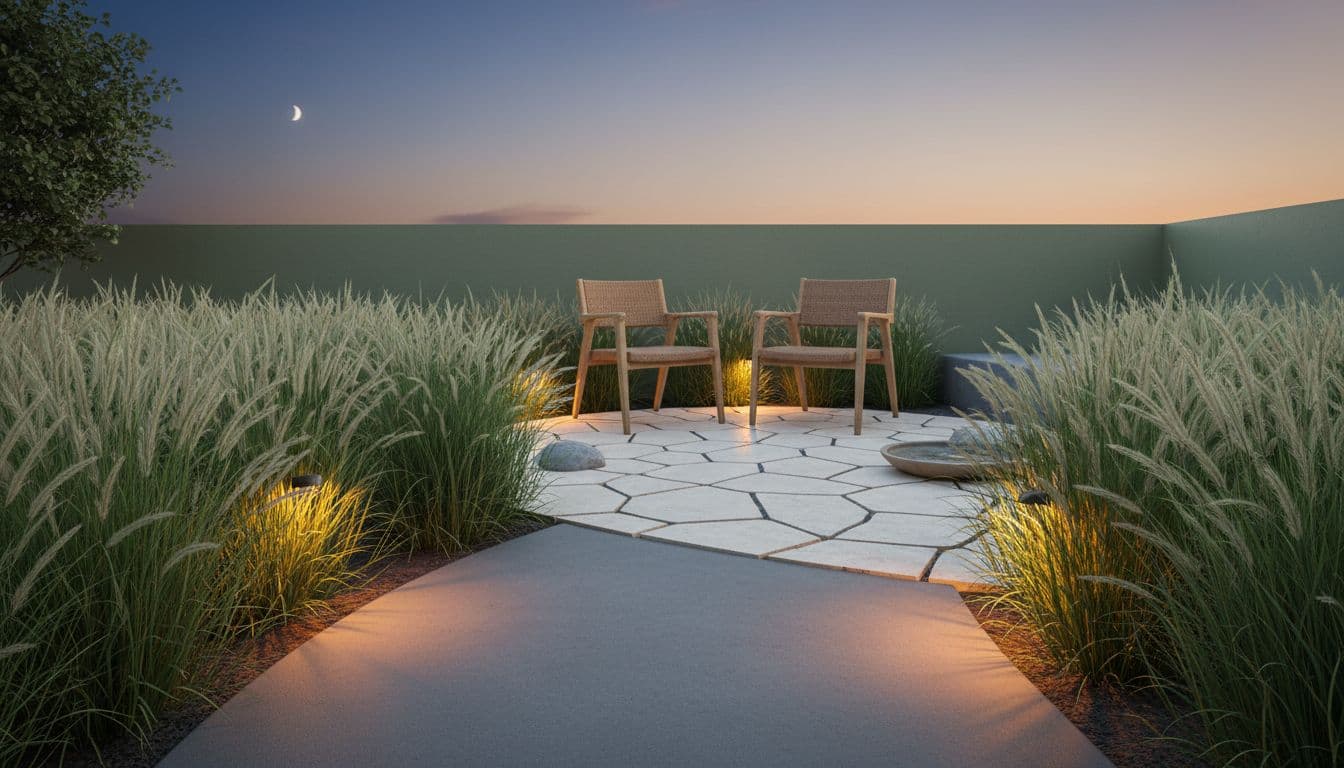
Not every style scales down equally well. Modern and minimalist styles tend to work best in genuinely tiny yards because they rely on a few repeated materials and plants rather than a wide variety, which reduces visual clutter. Cottage-style planting can still work, but needs tighter editing — fewer species, repeated more often, rather than one of everything. Japanese-influenced designs, built around restraint and negative space, are often a natural fit for a small backyard precisely because they were developed for compact courtyards in the first place. You can preview any of these against your own photo in the Garden Style Library before deciding.
For a deeper walkthrough of the photo-to-design process itself, see AI Garden Design From a Photo, and for the step-by-step version aimed at larger yards, How to Redesign Your Backyard With AI covers the same measure-photograph-generate-price sequence at a bigger scale.
Frequently Asked Questions
What is the best AI garden design for a small backyard?
The best option is a photo-based tool that keeps your real fences, walls and boundaries intact while proposing zoning, vertical planting and furniture scaled to your actual square footage. FlorAI does this from a single photo of your own small backyard, free to start.
How small can a backyard be and still have a proper design?
There is no minimum. Even a backyard under 20 m² (about 215 sq ft) can support a defined seating zone, a vertical planting feature and a small border — the key is zoning and vertical use of space rather than the total area available.
What plants work best for a small backyard?
Look for compact, slow-growing options with a documented mature size, such as Hebe topiaria or Osmanthus × burkwoodii, and use trellised climbers like compact clematis or a repeat-flowering climbing rose to add height without using floor space.
Is decking or paving cheaper for a small backyard?
Paving is usually cheaper: a paver patio runs roughly $10–17 per square foot installed in the US in 2026, versus $25–60 per square foot for timber or composite decking. On a small footprint the total dollar difference is often modest, so drainage and ground levelness usually decide it.
Do I need a landscape designer for a small backyard, or can AI garden design handle it?
For visualising layout, planting and furniture options, an AI tool like FlorAI is faster and free to start. A landscape designer becomes more valuable once the project involves structural work such as grading, drainage or retaining walls, which a photo-based design tool is not meant to engineer.
AI garden design for small backyard spaces works when the tool treats your actual square footage as the starting point, not an afterthought: zone the space into one or two rooms, plant vertically where floor space is scarce, check every plant's mature size before buying, and pick furniture that earns its footprint. FlorAI generates that kind of scaled design from a single photo of your own yard, free to start, so you can see the layout before spending on plants, paving or furniture. If you want to compare planning routes first, AI Garden Design vs Hiring a Landscape Designer and the AI Garden Design Apps Compared checklist are useful next reads, and you can browse the full outdoor space types FlorAI covers, including small gardens, patios and balconies.
Sources
- How to choose box alternatives — Royal Horticultural Society,
- 10 garden trellis ideas for vertical gardening — BBC Gardeners' World Magazine,
- USDA Plant Hardiness Zone Map — USDA Agricultural Research Service,
Read next