AI Garden Design for Patio: From Bare Slab to Outdoor Room

Garden design writer at FlorAI
Updated · 9 min read
AI garden design for patio spaces turns a photo of your actual slab, wall and boundary into a furnished, planted outdoor room in under a minute — keeping the paving and structure you already have rather than inventing a new footprint. The best results come from treating a patio as three separate decisions: the paving underfoot, the shade overhead, and the planting around the edge, each priced and specified before you touch a shovel. FlorAI generates that layout from one photo and is used as the working example throughout this guide.
What Is AI Garden Design for Patio?
It is the same idea as whole-garden AI redesign, narrowed to one paved space. Instead of asking an app to imagine an entire backyard, you photograph the patio itself — the slab, the boundary wall, the back door it sits against — and the app proposes new paving, shade and planting that respects those exact edges. That narrower scope matters because a patio is judged by different criteria than a lawn or a border: it has to work as furniture layout, traffic flow and microclimate all at once, not just as a planting scheme.
Three questions come up on every patio project regardless of size or style: what should the surface be made of, how do you get shade without losing all the light, and what actually survives in a planter through a full year rather than looking good for one photo. The rest of this guide takes each in turn, with real 2026 costs and sourced planting advice rather than generic inspiration.
Which Paving Material Suits Your Patio and Budget?
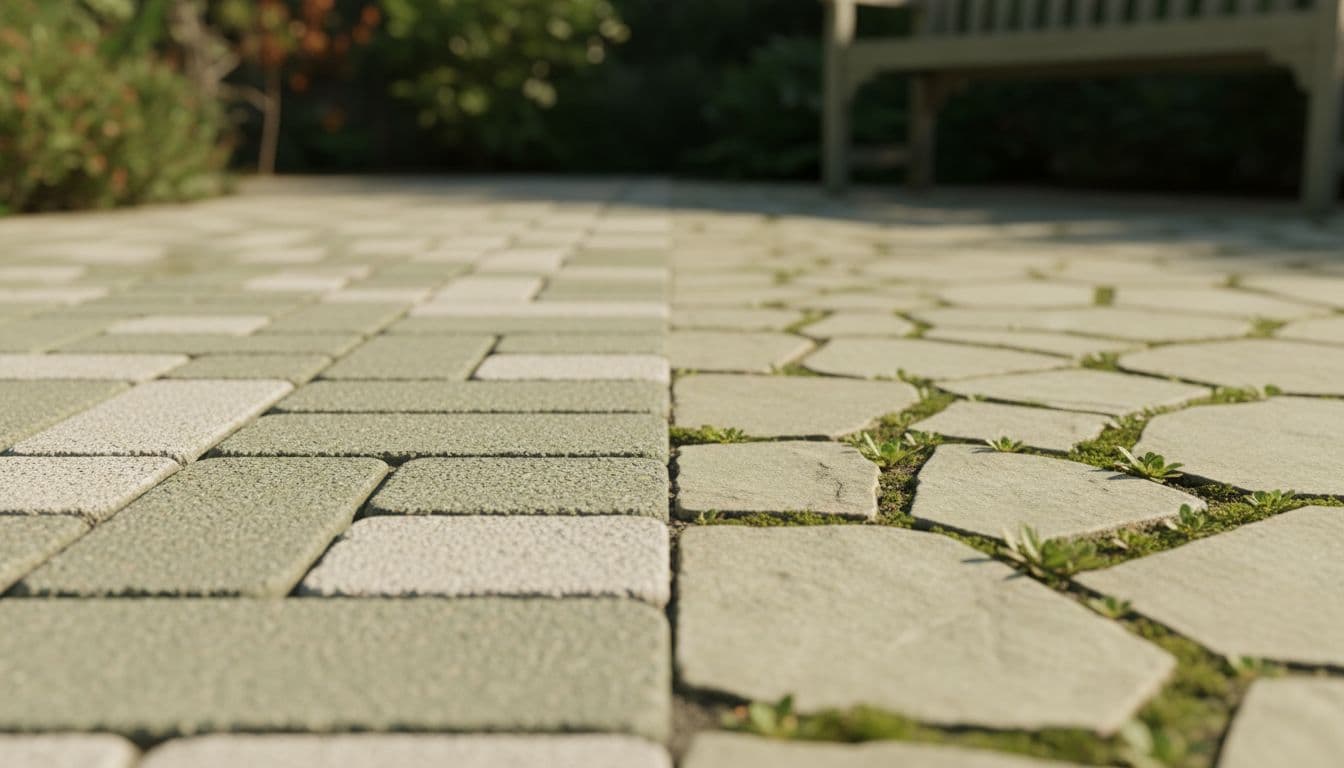
Paving is usually the largest single line item on a patio project, and the spread between materials is wide enough to decide the whole budget before planting is even discussed. As a rough guide for 2026 in the United States:
- Concrete pavers are the most affordable option, typically $8–$15 per square foot installed, and come in enough shapes and finishes to suit most modern or minimalist layouts.
- Natural stone, such as bluestone or travertine, runs considerably higher — roughly $40–$50 per square foot installed — reflecting both material cost and more specialised laying.
- Flagstone, the most popular natural stone choice for informal patios, sits between the two on material cost alone, before labour.
- Professional installation labour generally adds $4–$11 per square foot, or is charged at $50–$80 an hour, on top of materials — site preparation and drainage account for most of that time.
None of that changes what a design tool should show you before you commit to a material: a rendering that keeps your actual slab dimensions and step heights, so the paving choice you are picturing is sized to your real patio rather than a stock rectangle. AI garden design from a photo covers how that photo-to-render process works in more technical detail if you want the full walkthrough.
How Do You Create Shade Without Losing Light?
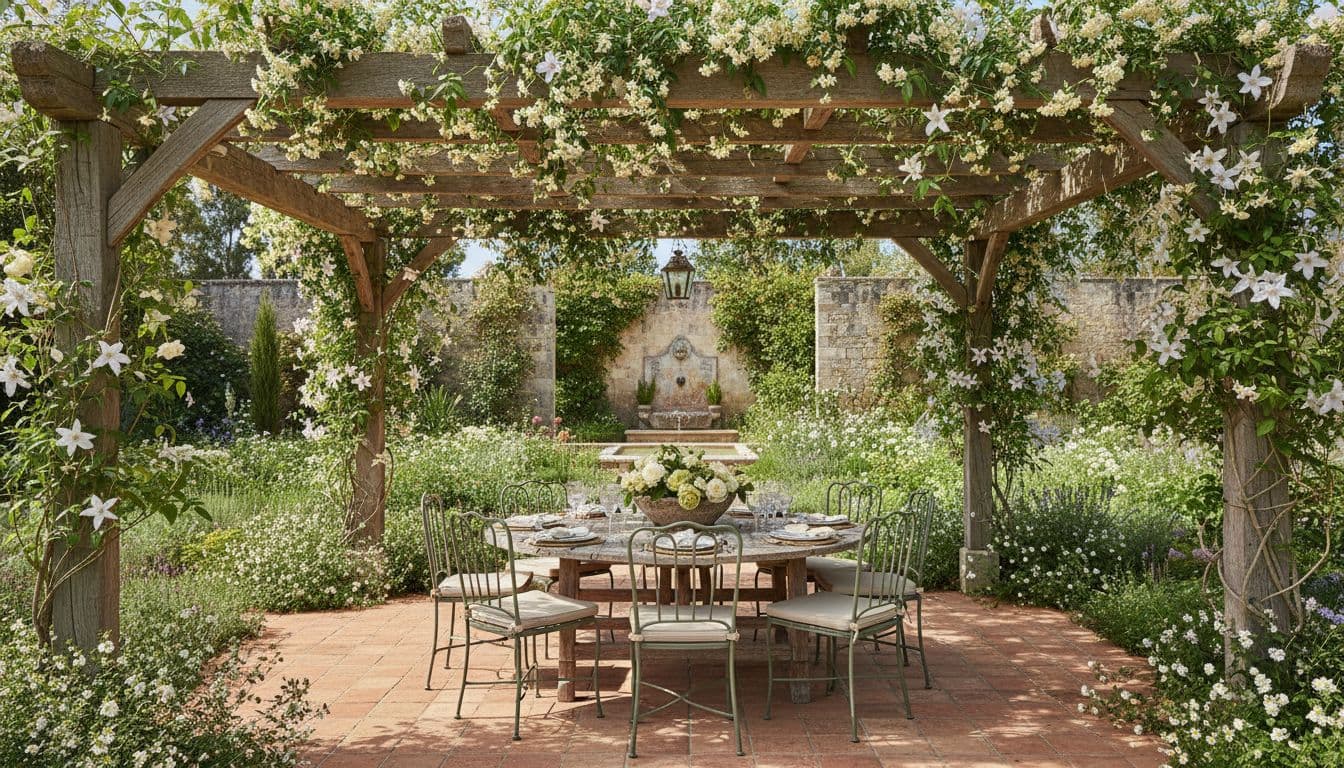
A patio that is unusable at 2pm in July is a patio that gets abandoned, so shade is not a finishing touch — it is a structural decision that should be made alongside the paving, not after it. The Royal Horticultural Society's guidance on garden shade points to two approaches that keep a space open rather than boxing it in: shade sails, which come in a wide range of shapes, materials and colours and can be layered to extend coverage while working as a design feature in their own right, and pergolas, whose open lattice lets sunlight filter through while still cutting the harshest midday sun.
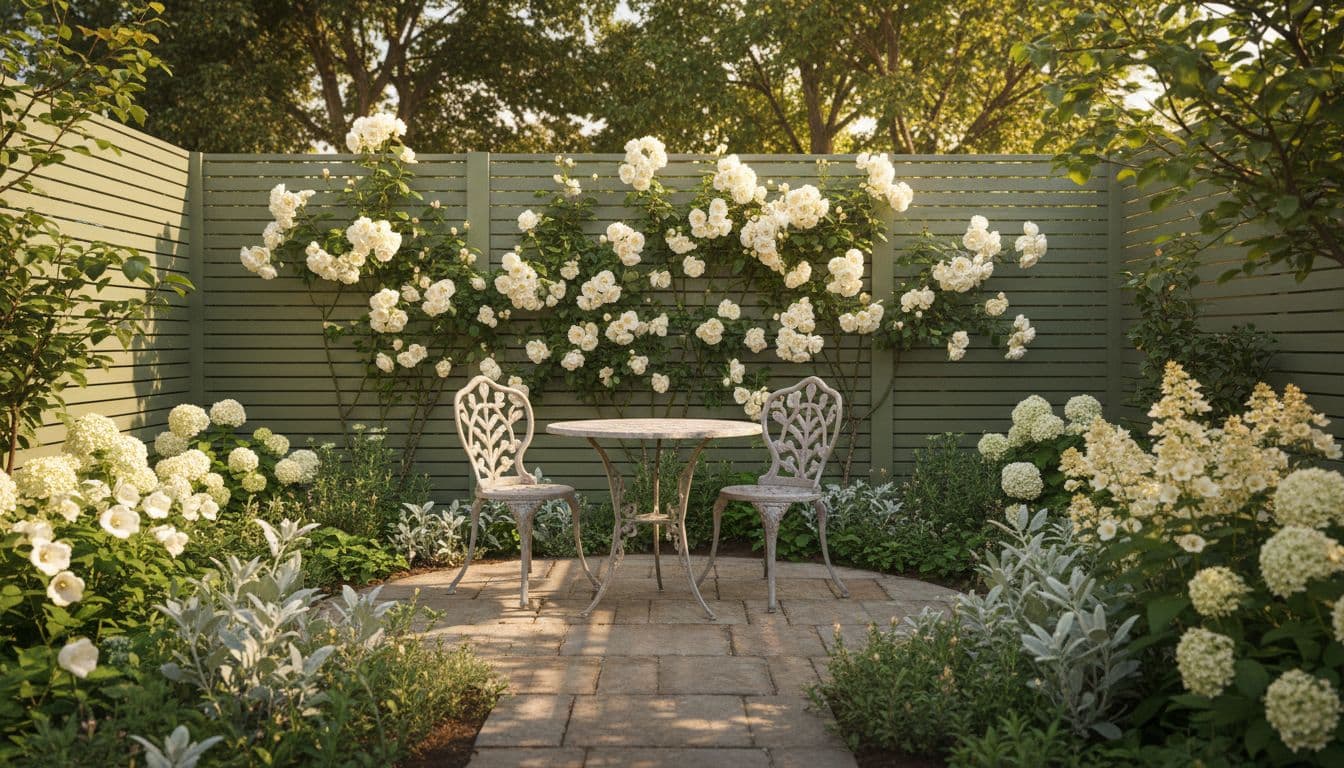
A pergola does double duty if it is planted rather than left bare. An RHS Chelsea Flower Show garden designer's advice, cited in the RHS's own shade guidance, is to grow scented climbers over the structure — clematis, honeysuckle and jasmine are the three most commonly recommended — so the shade comes with movement, scent and seasonal flowering rather than a static roof. A bare pergola gives you shade; a planted one gives you shade and a reason to sit under it.
- Decide the sun path first: stand on the patio at midday and mid-afternoon in summer and note which corner stays hot longest — that is where structural shade earns its keep.
- Choose a sail for a fast, removable fix over a dining or lounge zone; choose a pergola where you want a permanent structure that can carry climbing plants.
- Plant the pergola in its first season so the climbers have a head start before the next summer's heat.
- Keep at least one sunny corner unshaded — full shade all day makes a patio feel enclosed rather than sheltered.
How Big Should Patio Planters Really Be?
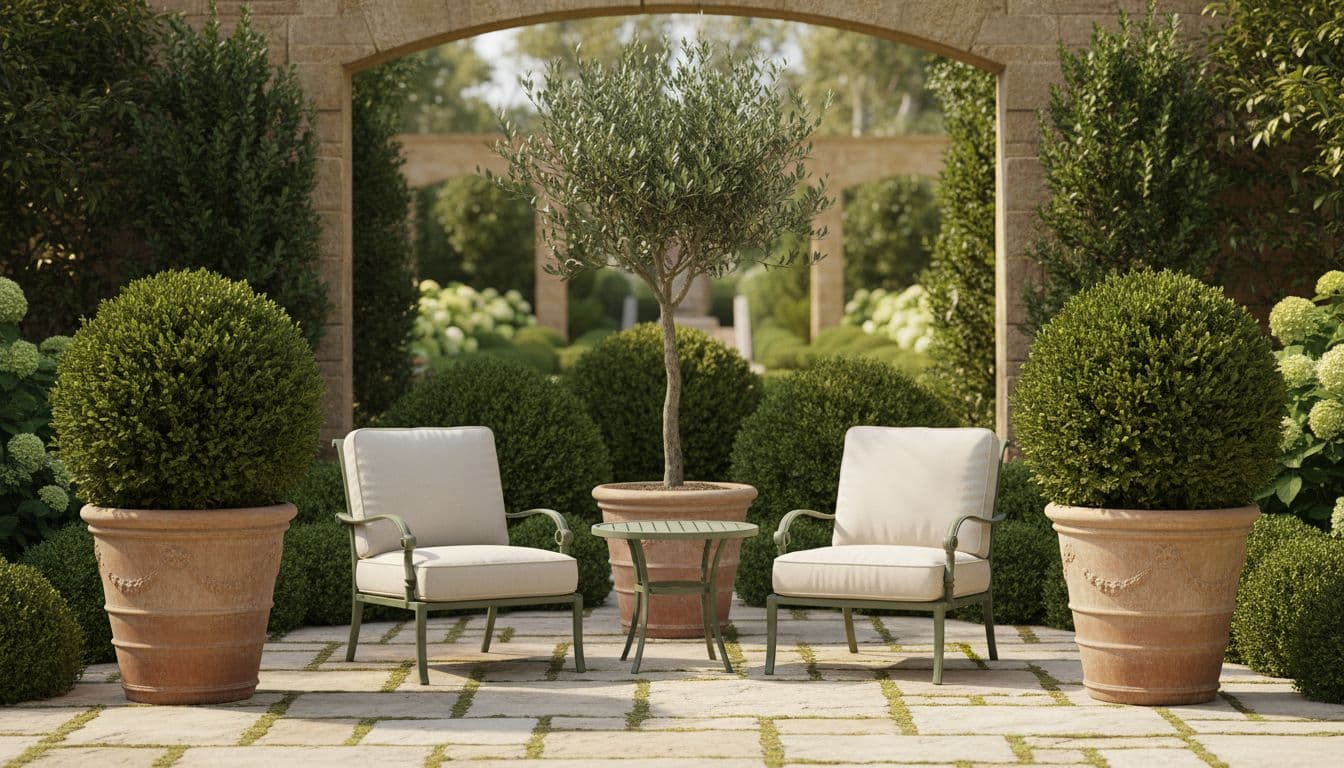
Undersized containers are the most common reason a patio planting scheme looks tired by its second summer. The RHS is specific on this: a tree or large shrub needs a minimum final container size of around 45cm (18in) in diameter, and the better practice is to pot up in stages — moving a young plant through two or three container sizes — rather than placing it straight into its largest pot, which leaves too much wet compost around a small root ball. Roses and compact climbers can work in slightly less, with a minimum depth of roughly 30–45cm (12–18in), but the same principle of drainage and root space applies.
Scale matters visually as much as horticulturally. Three or four large, matched planters read as intentional structure; a scatter of small, mismatched pots reads as clutter no matter how healthy the plants inside them. For a compact patio specifically, AI garden design for a small backyard goes into how vertical planting and container scale change again once the whole space is under about 40 square metres.
See your own patio redesigned before you order paving
Upload one photo of your patio and generate a furnished, planted layout in under a minute — with your real slab, wall and boundary kept intact. Your first AI garden design with FlorAI is free, on iPhone, Android and the web.


Version 1.1.1 · 132 MB
Which Plants Keep a Patio Usable in Three Seasons?
A patio planting scheme that only looks good in June is only doing a third of its job. The RHS's list of award-winning low-maintenance evergreens exists precisely for this problem: plants that hold their shape and colour through spring, summer and into autumn without constant intervention. For containers specifically, slow-growing or naturally dwarf forms cope best with the tighter root space and faster-drying compost that pots create compared with open ground.
- Box (Buxus), clipped into simple domes or cubes, gives year-round structure and tolerates the restricted root run of a large pot for years before it needs dividing.
- Dwarf conifers and compact junipers hold their shape through winter when perennials have died back, anchoring the planting scheme when everything else is dormant.
- Olive (Olea europaea) in a large, well-drained container reads as evergreen structure through most of the year in temperate climates, moving under cover only in the coldest weeks.
- Phormium and hebe add broadleaf contrast and, in the case of hebe, flower through the warmer months without needing to be swapped out seasonally.
Whatever the mix, check it against the USDA Plant Hardiness Zone Map before ordering anything, since a container plant is more exposed to cold than the same species in open ground — its roots have less insulating soil mass around them. A plant rated for your zone in a border is not automatically safe in a pot through the same winter.
How Do You Test an AI Patio Redesign in Five Minutes?
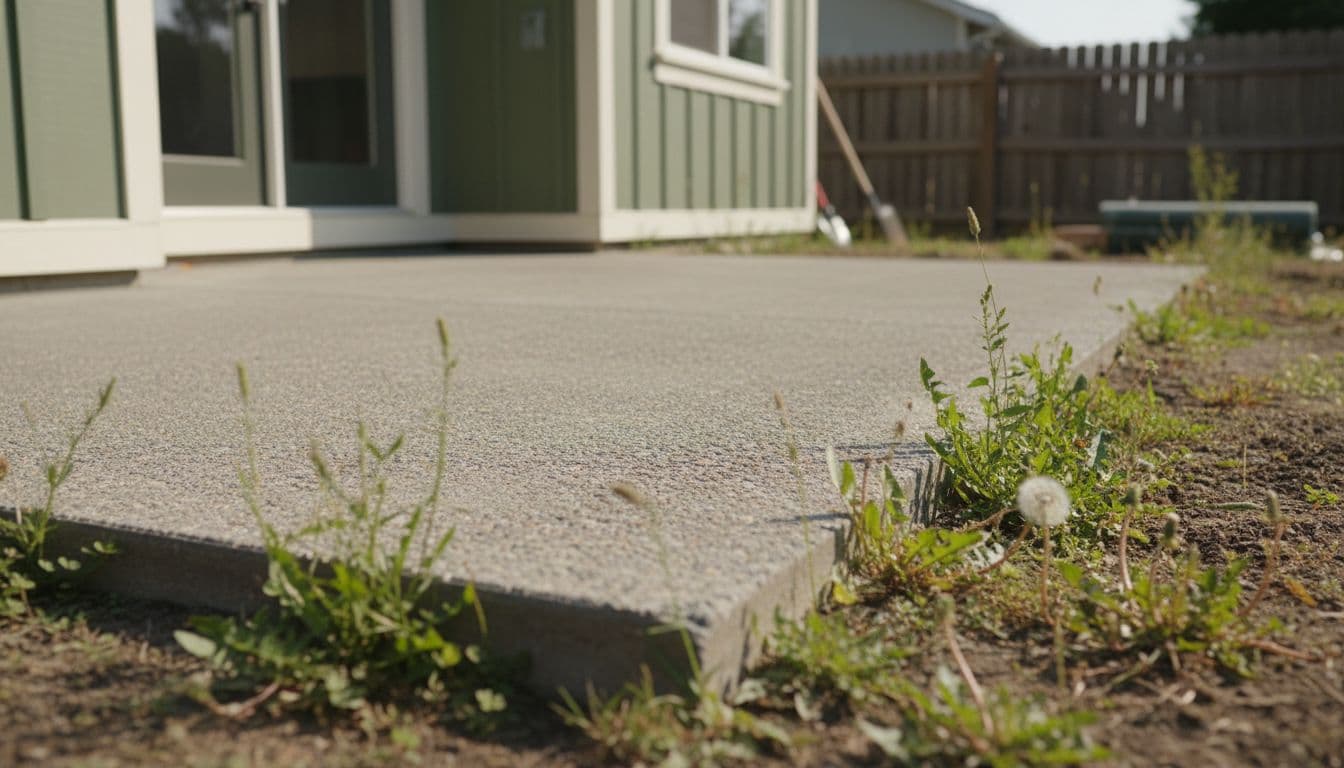
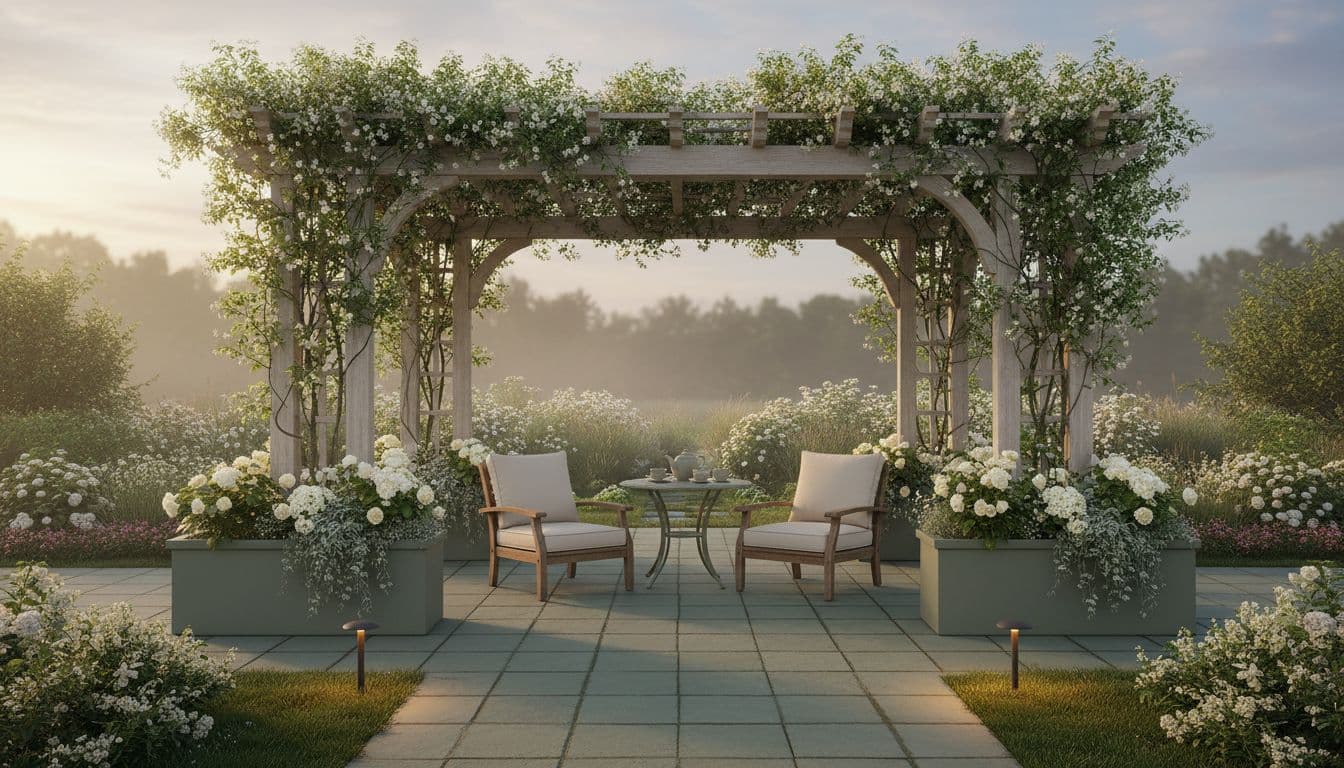
The same five-minute check that works for a whole garden works for a patio, with one addition specific to paved spaces: check that the render keeps your actual slab shape and any steps or level changes, since those are the hardest features to fake convincingly and the easiest to spot when they are wrong.
- Photograph the patio from the doorway you actually walk out of, in flat daylight, including any steps, walls or drainage channels at the edges.
- Generate two contrasting looks from that one photo — for example a paved dining layout and a softer lounge layout with more planting — to see how much the app is willing to vary.
- Check that the slab outline, step heights and boundary wall match your real patio in both results.
- Ask for a before-and-after view so you are comparing a change, not admiring an isolated image.
- Name the paving material, one shade option and two plants you could actually order from the render. If you cannot, it is not specific enough to price yet.
FlorAI's before-and-after comparison view is built for exactly that last check, and the outdoor space types treat a patio as its own layout logic rather than a smaller version of a backyard. For the fuller checklist across every kind of AI garden app, AI garden design apps compared turns this same reasoning into a scorecard.
Common Mistakes in Patio Design
The first mistake is sequencing: choosing paving before deciding how the space will be used, so the slab ends up the wrong shape for the table and chairs it was meant to hold. The second is treating shade as optional, then adding a sail or umbrella as an afterthought that clashes with everything already built. The third is undersized planters bought to fit a budget rather than a root system, which forces a replant within two years and costs more in the long run than buying larger the first time.
The fourth is planting for one season only — filling every pot with summer bedding that leaves the patio bare from October to April. Mixing in the evergreen structure described above, in the ratio the RHS suggests for borders generally, keeps a patio looking finished even in the months nobody is sitting out on it. For the wider low-upkeep principles that apply to paving and planting alike, low-maintenance garden design covers the same trade-offs for a full garden.
Frequently Asked Questions
What is AI garden design for a patio?
It is the use of an AI app to redesign a photo of your actual patio — keeping the real slab, walls and steps — into a furnished, planted layout with new paving, shade and planting options, rather than generating a generic stock scene. FlorAI does this from a single photo in under a minute.
How much does a patio cost to pave in 2026?
In the US in 2026, concrete pavers installed typically run $8 to $15 per square foot, while natural stone such as bluestone or travertine runs roughly $40 to $50 per square foot installed. Professional installation labour generally adds $4 to $11 per square foot on top of material costs.
What is the best way to shade a patio without blocking all the light?
The Royal Horticultural Society recommends shade sails for a fast, flexible fix and pergolas for a permanent structure that can be planted with scented climbers such as clematis, honeysuckle or jasmine, which filter light rather than blocking it entirely.
How big should a patio planter be for a small tree or shrub?
The RHS advises a minimum final container size of around 45cm (18in) in diameter for a tree or large shrub, and recommends potting up in stages rather than starting in an oversized pot, since too much compost around a small root ball drains and dries unevenly.
Which plants keep a patio looking good all year?
Slow-growing or dwarf evergreens cope best with container life — clipped box, dwarf conifers, olive in a large pot, and hebe or phormium for broadleaf contrast all hold structure through winter. Check any species against the USDA Plant Hardiness Zone Map before buying, since a container plant is more exposed to cold than the same species in open ground.
AI garden design for a patio works best as three decisions made together — paving, shade and planting — priced against real 2026 costs and checked against your own photo rather than a template. FlorAI generates that layout from your actual slab for free on iPhone, Android and the web, which is a faster and cheaper way to see the options than reading another list of ideas.
Sources
- How to create shade in your garden — Royal Horticultural Society,
- Growing plants in containers: expert guide — Royal Horticultural Society,
- 10 award-winning low-maintenance evergreen plants — Royal Horticultural Society,
- 2023 USDA Plant Hardiness Zone Map — USDA Agricultural Research Service,
- Patio — Wikipedia,
Read next