AI Front Yard Design: Curb Appeal From One Photo

Garden design writer at FlorAI
Updated · 8 min read
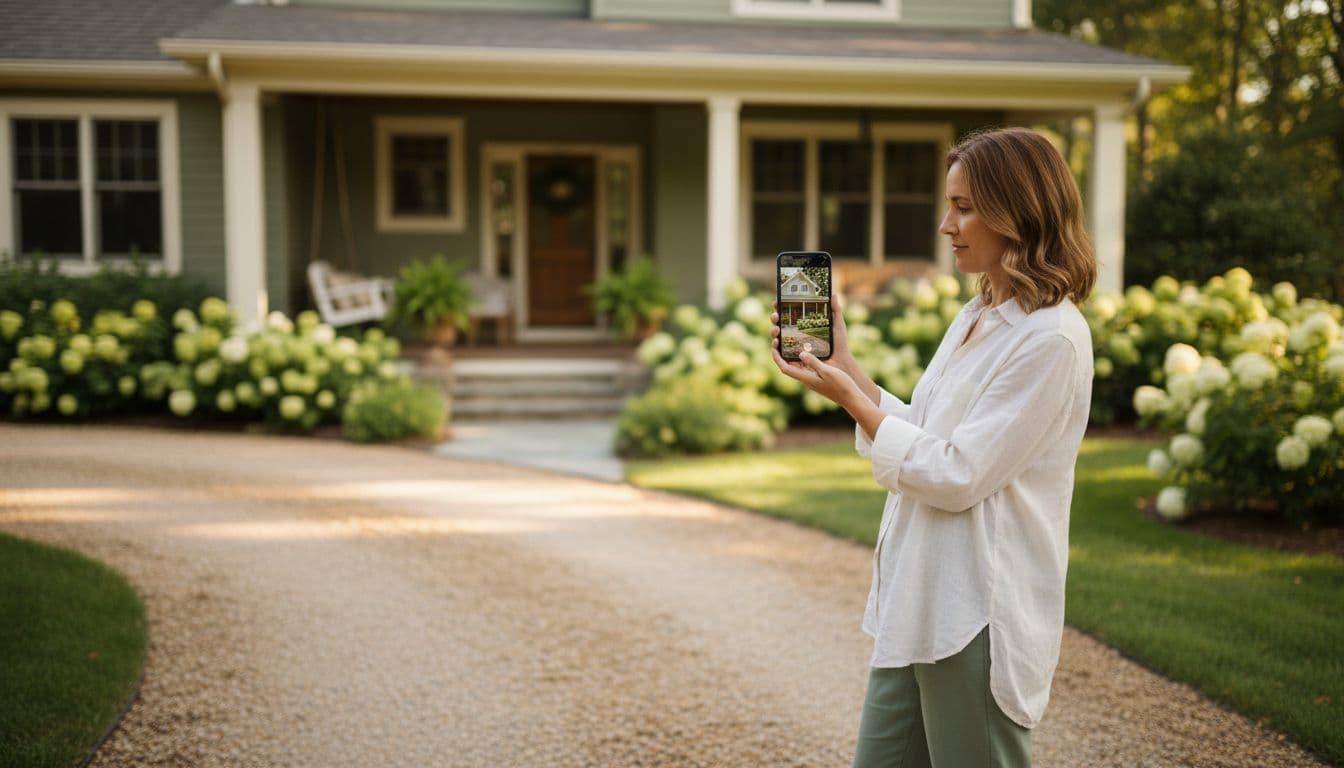
AI front yard design turns one photo of your porch, walkway and lawn into a photorealistic, buildable curb-appeal plan — adjusting foundation planting, path proportions and lighting while keeping your real house, driveway and boundaries exactly where they are. The fastest way to lift kerb appeal is rarely a full replant. It is usually three fixes: the bed against the house, the width and material of the path to your door, and how the front of the house reads after dark.
What Is AI Front Yard Design?
It is the same idea as any AI garden redesign tool, aimed specifically at the part of a property strangers see first. Instead of generating an unrelated show-garden image, a genuine AI front yard design tool works from a photograph of your actual house — its brick or siding colour, roofline, door position, driveway and any mature planting worth keeping — and proposes a new arrangement of foundation beds, walkway, lawn edge and lighting around them. FlorAI is built around that photo-first approach, with a dedicated front yard category inside its outdoor space types, and is used as the working example through this guide.
Judge any candidate the same way you would judge a full garden app: does it keep your real house and driveway in the result, does it propose plants and materials you could actually buy, and can you try it free on your own photo before paying? The full breakdown of those criteria is in best AI garden design app.
How Do You Get Foundation Planting Right?
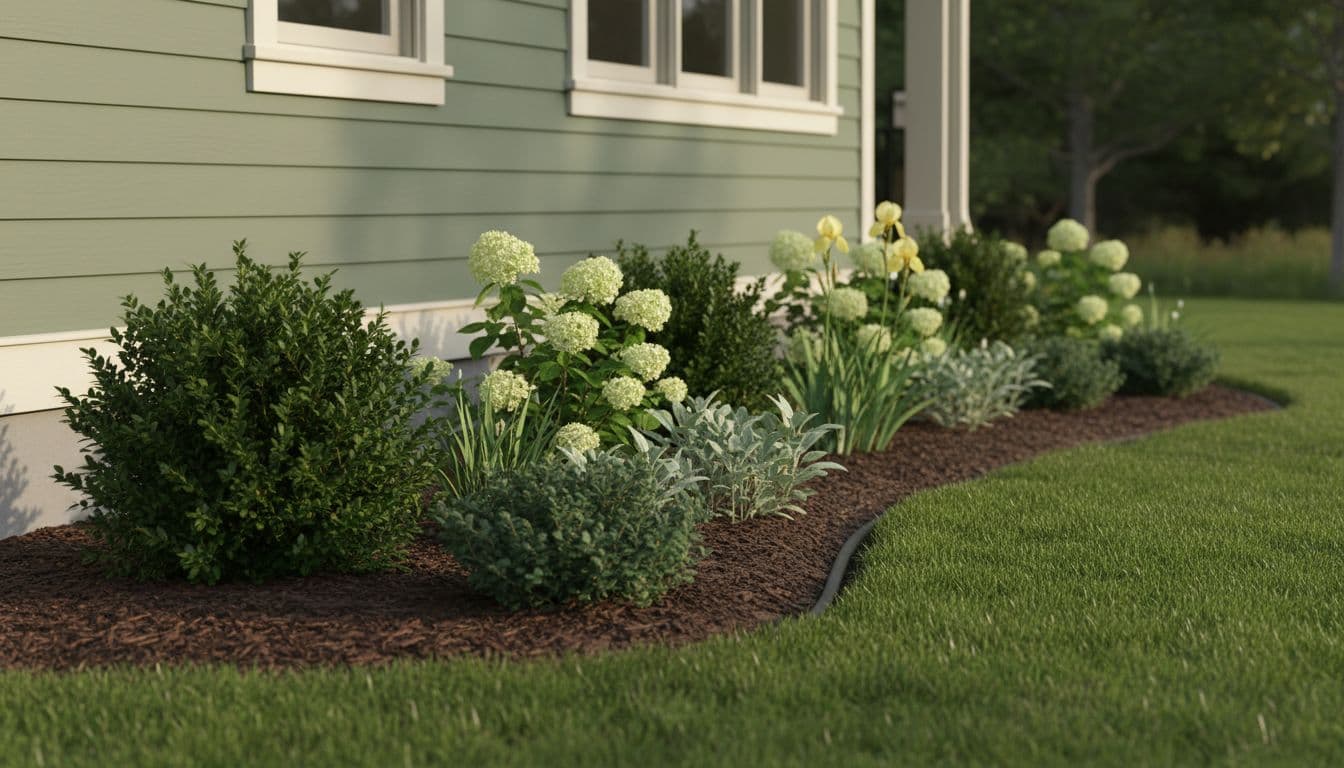
Foundation planting is the bed that runs along the base of the house, and it is the single element that most decides whether a front yard reads as finished or neglected. Four habits keep it working as the house ages and the plants grow:
- Give the wall room to breathe. Keep the front rank of shrubs roughly a metre (3 ft) clear of the wall so foliage does not trap moisture against siding or brick, and let beds run out 1.8–2.4 m (6–8 ft) from the house where space allows, so plants further from the wall still get useful light.
- Match scale to the house. A pair of shrubs that will reach head height look right beside a single-storey porch and swallow a two-storey entrance; check a plant's mature spread, not its size in the pot, before it goes anywhere near a window.
- Build an evergreen backbone, then add change. A planting that is entirely evergreen looks static all year; one that is entirely deciduous disappears in winter. A mostly-evergreen base with a few deciduous shrubs or perennials worked through it keeps the bed structured in January and interesting in June.
- Keep sightlines to the door and house numbers clear. Whatever else changes, a visitor and a delivery driver both need to find the entrance without pushing through planting.
What Width Should a Front Walkway Be?
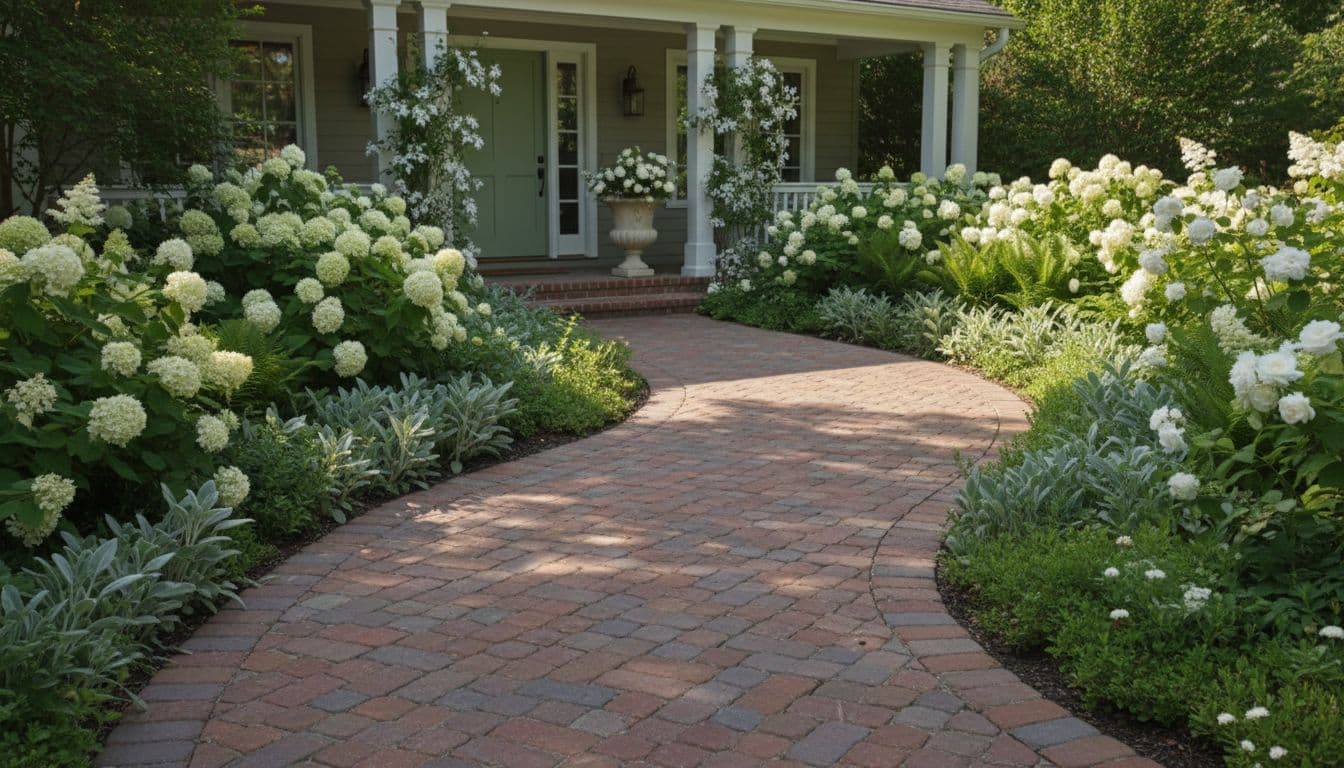
Proportion, more than material, is what makes a front path feel right. A primary path — the one from the street or driveway to the door — is generally most comfortable at 1.2–1.5 m (4–5 ft), wide enough for two people to walk side by side without stepping into the border. A narrower path of 60–90 cm (24–36 in) reads as a secondary route, fine for a side gate or a spur to a bin store, awkward as the main approach to a front door.
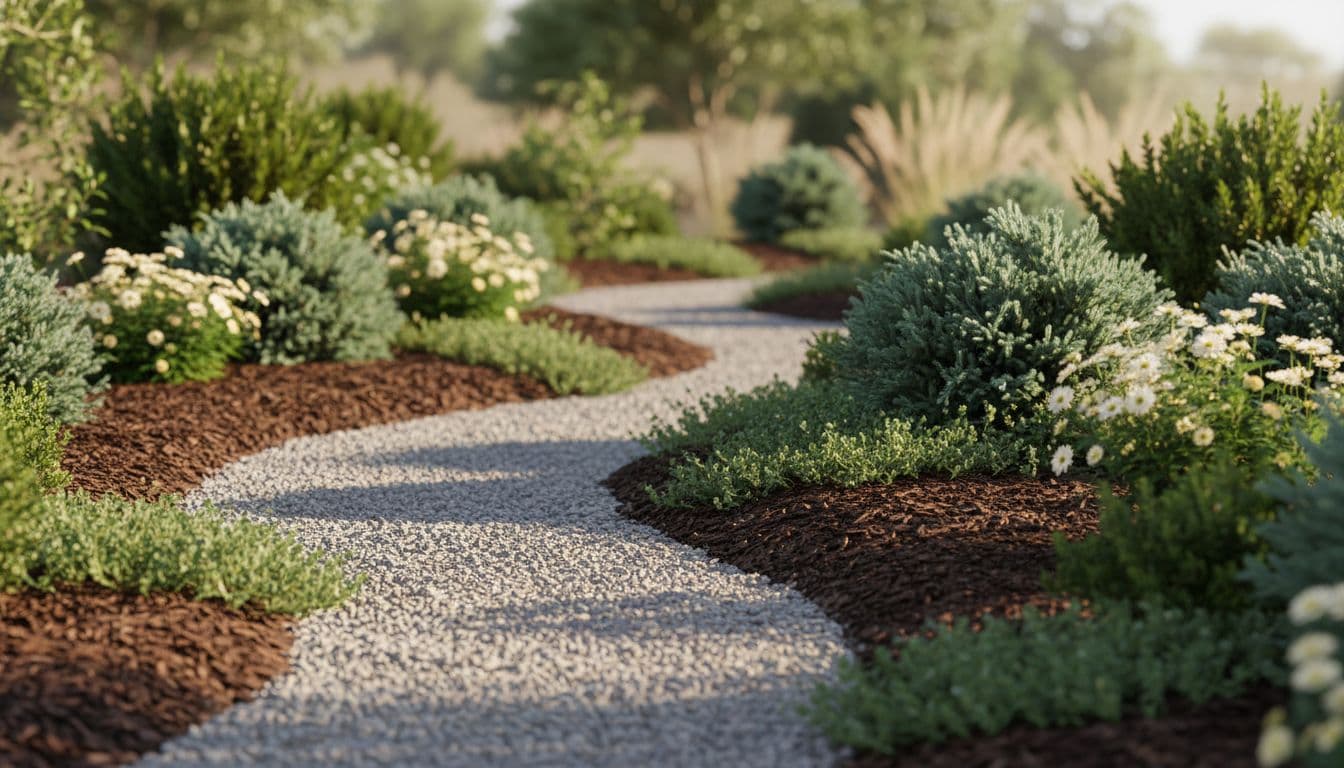
Material should read as an extension of the house rather than a separate decision: brick or clay pavers suit a traditional façade, large-format stone or poured concrete suit a modern one, and gravel works as a budget option if it is edged so it does not migrate onto the lawn. Whatever the width and material, keep the slope gentle — a path that climbs more than a couple of percent starts to feel, and in ice can become, a hazard right at the point where people are least steady, stepping down from a porch.
Which Small Trees Suit a Front Yard?
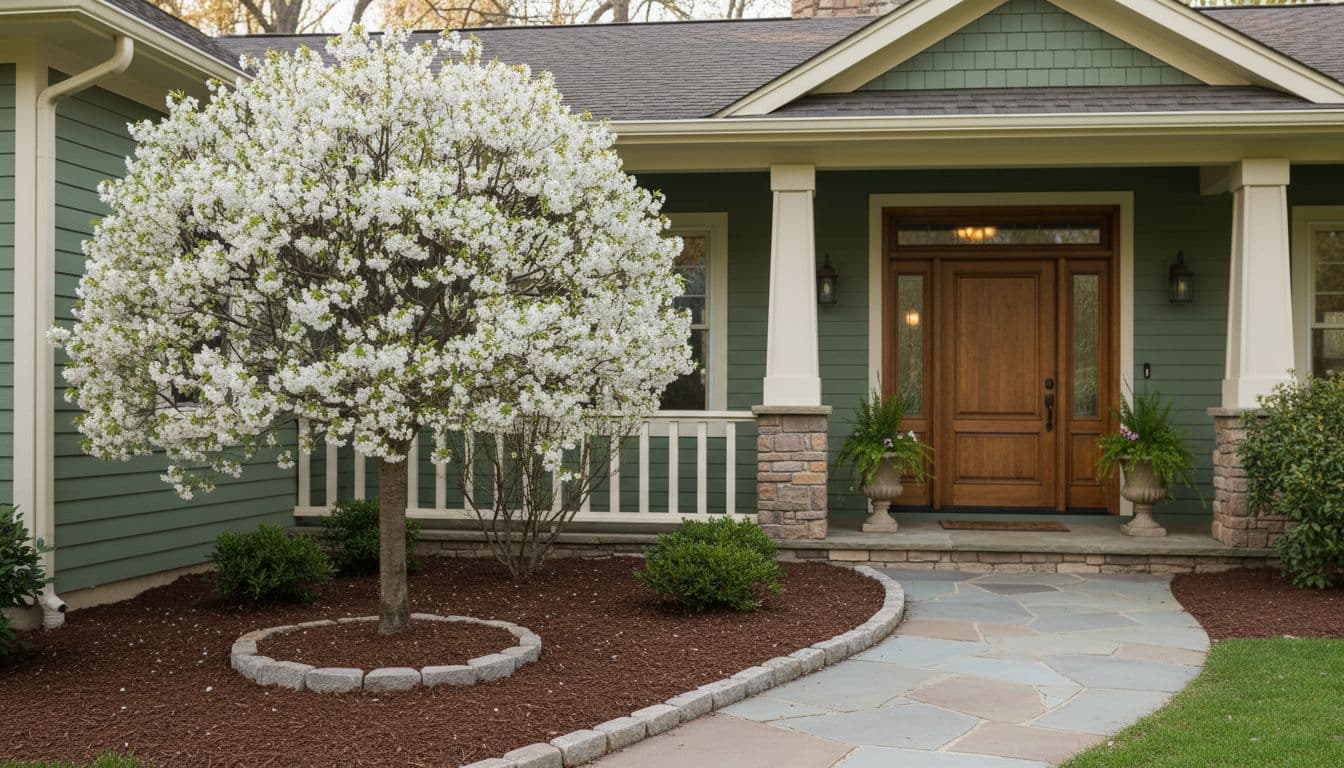
A single well-placed small tree does more for kerb appeal than most planting beds, because it gives the eye something to land on above knee height. The trick in a front garden, which is usually shallower than a back one, is choosing something that stays proportionate for decades, not just for the first five years.
- Amelanchier lamarckii (snowy mespilus) carries white spring blossom, edible summer berries and strong red autumn colour; compact selections such as Amelanchier alnifolia 'Obelisk' reach around 4 m (13 ft) tall with a spread of about 1 m (3 ft), narrow enough for a border beside a path.
- Acer palmatum (Japanese maple) stays naturally compact and slow-growing, with fine, layered foliage that colours strongly in autumn; it suits a spot near an entrance where it will be seen up close rather than from across a lawn.
- Check the mature height against your house, not against the nursery pot. Even a tree sold as a 'small' or 'ornamental' variety can reach 6–8 m (20–26 ft) over time, tall enough to interfere with upstairs windows or overhead cables if it is planted too close.
Whatever species you shortlist, confirm it against the 2023 USDA Plant Hardiness Zone Map, which divides the United States into 13 zones and 5°F half zones from 1991–2020 weather records, and against the RHS's trees for smaller gardens profiles for mature size and growing conditions before you commit a front yard's single most permanent feature.
See your own front yard redesigned
Upload one photo of your porch and walkway and generate a buildable design with foundation planting, path and lighting in under a minute. Your first design with FlorAI is free, on iPhone, Android and the web.


Version 1.1.1 · 132 MB
How Should You Light a Front Yard?
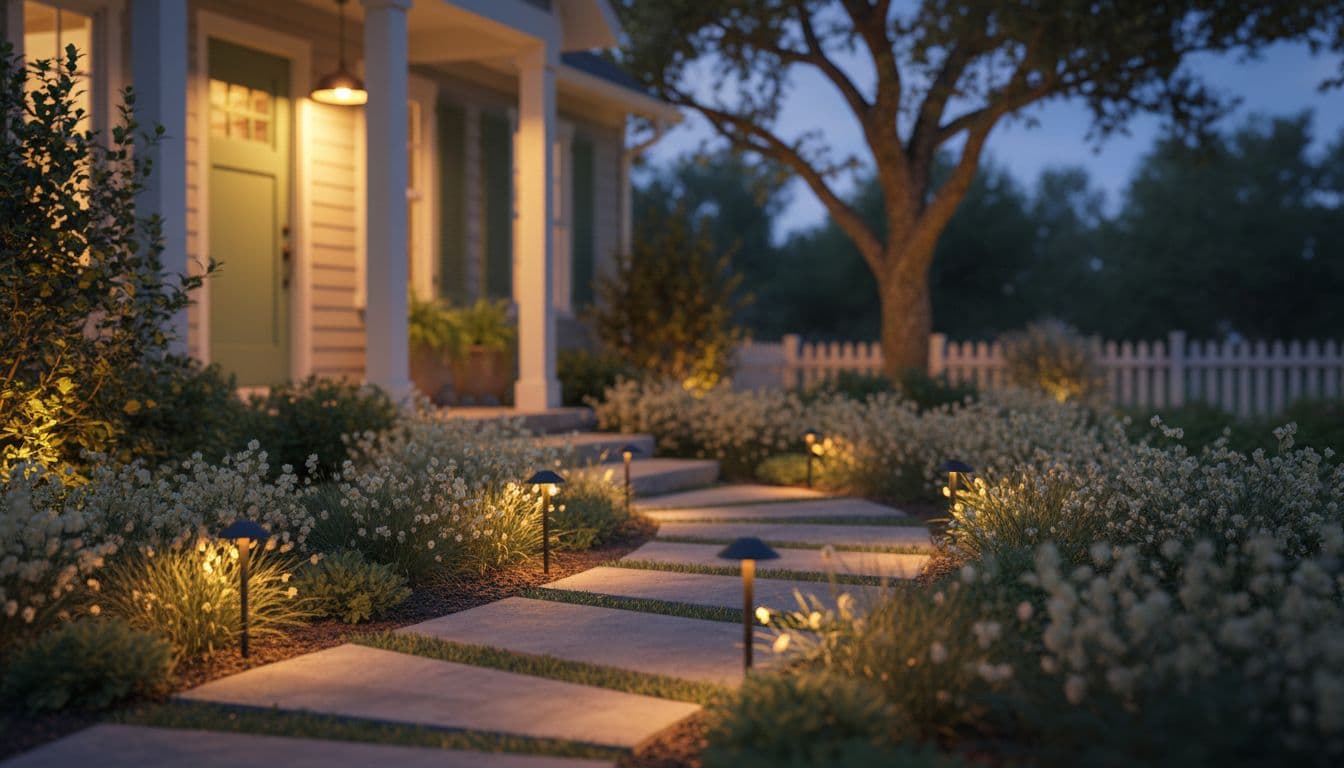
A front yard is judged twice a day — once by daylight and once by whoever arrives after dark, so lighting is not a finishing touch, it is half the design. Layered lighting generally does three jobs: low path lights mark the route to the door at ankle height without glare, a warm fixture at the entrance identifies it from the street, and one or two uplights pick out a specimen tree or an architectural feature so the façade has depth rather than a single porch bulb doing everything.
A modest, professionally installed low-voltage system for a front yard typically runs from around $1,500 up to $3,500, and a fuller layout with path lighting plus two or three accent points can reach $2,500–$5,000; a basic DIY solar or low-voltage kit costs well under $200 if the goal is simply a lit path rather than a designed look. LED fixtures use a fraction of the electricity of the halogen sets they replaced, so the running-cost difference compounds over years even where the installed cost does not.
How Do You Test an AI Front Yard Design in Five Minutes?
The same short test that works for a full garden app works here, adjusted for the front of the house:
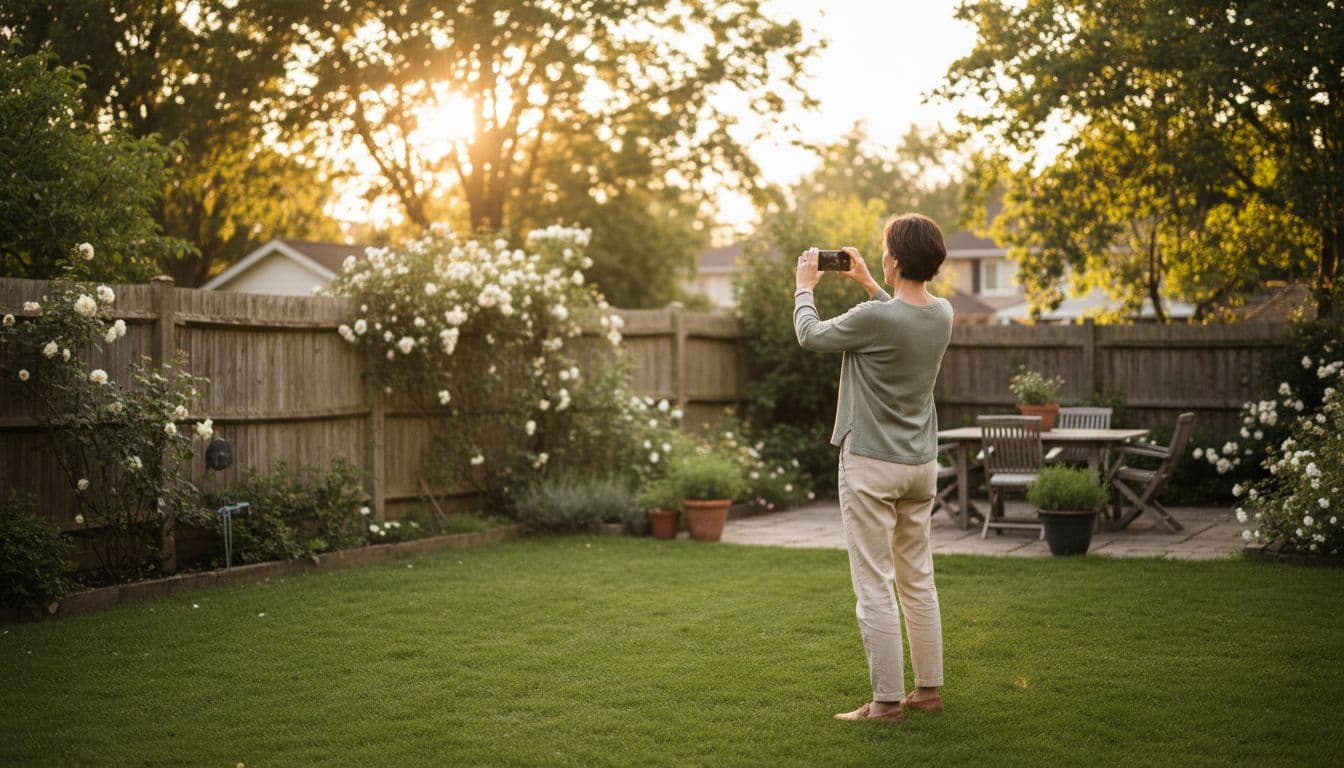
- Stand where a visitor actually stands — at the end of the driveway or the pavement — and photograph the house in flat daylight, not a wide-angle trick shot.
- Generate two contrasting versions from that one photo: a planting-led refresh and a more structural one with a new path or lighting scheme.
- Look for the house itself in both results — the door, the roofline, the window positions, the house numbers. If they have shifted or vanished, the tool is generating a new house rather than redesigning yours.
- Ask for a before-and-after view so you are judging a change to your actual kerb appeal, not admiring an isolated render.
- Name three things in the result you could order this weekend — a specific shrub, a paving material, a light fixture — because a design that cannot produce a shopping list is not specific enough to build from.
FlorAI's before-and-after comparison view is built for exactly that side-by-side check, and its full garden style library covers formal, modern and cottage-style front gardens as well as the loose, informal look many people actually want.
What Should You Leave Alone?
Kerb appeal is as much about restraint as addition. A mature tree that already frames the house, an original brick porch, or a path that is structurally fine but merely unfashionable are usually better kept than replaced, since a large tree in particular takes decades to replace and does more for a street-facing view than almost any new planting could in its first ten years. House numbers, a mailbox, and any HOA- or council-specified boundary treatment are constraints to design around, not obstacles to remove in a render — a design that ignores them looks appealing on screen and becomes a fight to actually build.
This is also where a photo-based tool earns its keep over a mood board: because it starts from your real photo, it is forced to keep dealing with the tree, the mailbox and the boundary that a generic template would simply omit.
What Does a Front Yard Refresh Cost Without an App?
In the United States in 2026, landscape designers typically charge $50 to $150 an hour, with a first consultation commonly $100–$200 and usually covering that first hour. A front yard is normally a smaller job than a full backyard, so a simple planting and path refresh can sit at the lower end of a designer's typical project range, while adding hardscape changes or a full lighting installation moves it up quickly.
- Use an AI app to narrow the brief. Turning six vague ideas about the front of the house into one specific plan — a style, a planting palette, a path width — is exploration, and it is faster and free from your own photo.
- Bring in a professional for anything structural. Regrading a slope, changing drainage near the foundation, or running electrical for a lighting system are jobs where a licensed contractor, not an image model, is the right call.
AI garden design vs hiring a landscape designer sets out that comparison for a full garden in more detail, and the same logic scales down cleanly to a front yard. The step-by-step version of a full-space redesign is in how to redesign your backyard with AI, and the photo mechanics behind any of these results are covered in AI garden design from a photo.
Frequently Asked Questions
What is AI front yard design?
AI front yard design is the use of a photo-based app to redesign your actual porch, foundation beds, walkway and lawn into a new, buildable layout — keeping your real house and driveway rather than generating a generic scene. FlorAI generates a first design from your own photo for free.
How far should foundation planting be from the house?
As a general rule, keep the front row of shrubs roughly a metre (3 ft) clear of the wall for airflow, and let beds extend 1.8–2.4 m (6–8 ft) out from the house where space allows, so plants further from the wall still get enough light.
How wide should a front walkway be?
A primary path from the street or driveway to the door is most comfortable at 1.2–1.5 m (4–5 ft), wide enough for two people side by side. A narrower 60–90 cm (24–36 in) path works for a secondary route but feels tight as a main entrance.
What is a good small tree for a front yard?
Amelanchier lamarckii and Acer palmatum both stay proportionate in a shallow front bed for decades and give spring or autumn interest. Check any tree's documented mature height, such as the RHS profiles for trees for smaller gardens, against your house before planting it near a window or path.
How much does landscape lighting cost for a front yard?
A modest professionally installed low-voltage system typically runs from about $1,500 to $3,500, and a fuller layout with path and accent lighting can reach $2,500–$5,000. A basic DIY kit costs well under $200 if the goal is simply a lit path.
A better front yard, in the end, comes from getting three ordinary things right — the bed against the house, the path to the door, and the light after dark — rather than from a single dramatic change. FlorAI is built to test all three on your own photo, free to start on iPhone, Android and the web.
Sources
- Trees for smaller gardens — Royal Horticultural Society,
- 2023 USDA Plant Hardiness Zone Map — USDA Agricultural Research Service,
- Best Amelanchier Trees — Gardeners' World Magazine,
- Garden design — Royal Horticultural Society,
Read next